
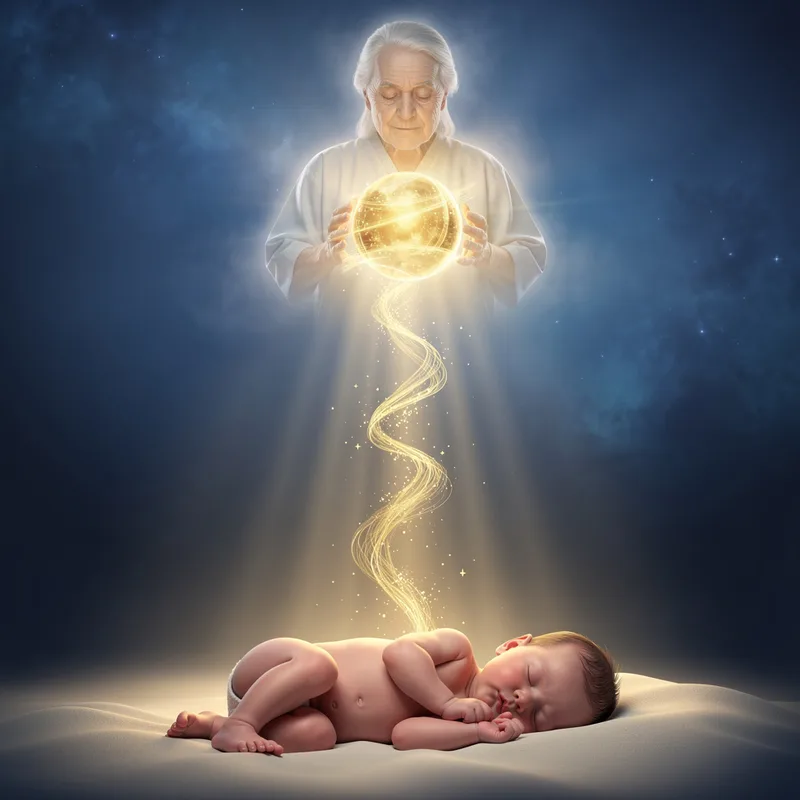
incarnation
 10
7.9
10
7.9

- noun
- /ˌɪn.kɑːrˈneɪ.ʃən/
- According to the ancient epic Ramayana, Ram, the incarnation of the Hindu god Vishnu, was born in the kingdom of Ayodhya.
- previous incarnations
- earlier incarnations
Loading YouTube…
Watch on YouTubeIn a previous incarnation, I was involved in some shady things.
- In a previous incarnation, I was involved in some shady things.
- I've known him for many years, many incarnations.
- You have Melchizedek, who many believe is one of the incarnations of Thoth and Metatron on Earth.
- Why am I here and what is my task for this incarnation so beautiful?
- You know, I firmly believe that before we took the incarnation, we made a promise to ourself.
- So whatever that means, I'm, I'm there till the till the end of this incarnation and maybe beyond.
- Your, your soul is the light, The Lantern is your countless incarnations.
- There is no reconciliation and therefore the incarnation that occurs in these religions has no, no truth.
- Likewise, our only real incarnation is always this cold and these black bones that the year and it's turning returns to US.
Examples
-
He suggested you had both been enemies in a previous incarnation.
-
In a previous incarnation, I was involved in some shady things.
-
The woman believed that every living thing had been her mother in a previous incarnation.
Fiction book (2001) -
There is inherent continuity between Jesus' incarnation and his life and death.
Academic text (2009) -
In Mongolia, they believe that when a dog has finished living his lifetimes as a dog, his next incarnation will be as a man.
-
The richly woven images and texts tell stories of the incarnations of the Hindu God Vishnu.
-
Many cultures believe in reincarnation, seeing each life as a new incarnation of the soul.
-
In her teachings, the monk explained that this life is just one incarnation among many.
-
The concept of incarnation suggests that our physical existence is a temporary state of being.
Synonyms
 ∞
1.0
∞
1.0
The time from birth to death when a person is alive
 838
2.8
838
2.8
The state of being real or alive
 37
8.1
37
8.1
A god appearing on earth in a human or animal form
Antonyms

How Bodily

Surface Forms
Morphology
incarnation = incarnate (opaque) = in + carn + ate + ion
For learners who know the verb 'incarnate', the noun 'incarnation' is a regular and readily interpretable -ion formation.
Etymology
Incarnation comes from Latin parts in- 'in' and carnis 'flesh', so it originally meant 'to become flesh'. In religion, an incarnation is a being appearing in a body, and the origin helps explain the idea of a god or soul taking a physical form.