

incarnation
 23
6.3
23
6.3

- noun
- /ˌɪn.kɑːrˈneɪ.ʃən/
- The latest incarnation of the smartphone includes several new features that users love.
- current incarnation
- latest incarnation
- new incarnation
Loading YouTube…
Watch on YouTubeOr some some other incarnation of that.
- Or some some other incarnation of that.
- This is the final installment of Chill Chums for this incarnation, right?
- And we see the latest incarnation of them in the earthworks that, that have survived to this day.
- So I do think that's a vital part of our heritage brought forward into its next incarnation.
- That took about a year, but we took that time because the movie is much better now than it was in its first incarnation.
- So it it's to make you more you, you know, in your own particular incarnation, your own particular way.
- And I think it was for one of the Band of Band of Brothers incarnations.
Examples
-
It's therefore often referred to as this first incarnation of a scientific medicine as bedside medicine.
-
In each of these cultures, science was different from the modern incarnation, and so were the religions.
Academic text (1996) -
And then also just talk about the first incarnation of the game as you played it for yourself.
-
In its most recent incarnation, we have known it as the problem of "the two cultures."
Academic text (2003) -
The lines of this canon in its current incarnation are not quite so clearly drawn.
Academic text (1990) -
This is the first real incarnation of trying to apply their conception of morality to all of America.
-
Good evening, and welcome to the next incarnation for Darwin's Legacy.
-
So you have to be prepared to explain how your features different from other incarnations in the history of literature.
-
The end result is a flexible, hybrid culture, one that has many incarnations and many centers.
Academic text (1996) -
We're very pleased with some of the concepts we've come up with for the new incarnation of Harraps.
Synonyms
 58
3.5
58
3.5
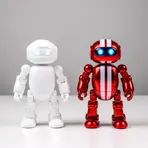
A slightly different version of a person or thing
Antonyms

How Distinct

Surface Forms
Morphology
incarnation = incarnate (semi-transparent) = in + carn + ion
Morphologically a regular nominalization from 'incarnate' meaning 'a particular embodiment or instance'.
Etymology
Incarnation comes from Latin in- 'in' and carnis 'flesh', meaning 'becoming flesh'. A helpful way to remember its modern use is to think of each new form or version as a new 'body' for the same idea, which is why we talk about a new incarnation of a product or character.