
immateriality


 1
9.6
1
9.6
- noun
- /ˌɪməˈtɪəriəlɪti/
- Specialized
- The immateriality of dreams makes them difficult to analyze in terms of physical existence.
Examples
-
Aquinas concludes that one cannot directly infer from the immateriality of one of the soul's powers that the soul itself is also immaterial.
Academic text (2017) -
On the one hand, it is necessary to show that the individuality of an embodied person will not jeopardize the immateriality of his thinking nor the possibility that someone else could think about the same thing.
Academic text (2017) -
Conscious awareness of unity is taken as a guide to the immateriality of the soul.
Academic text (1998) -
For its double aspect helps us better conceive of the combination of individuality and immateriality in a single entity.
Academic text (2017) -
As we have argued, this implies that the intellective soul is the ultimate source of thinking's immateriality.
Academic text (2017) -
As her dress suggests, and as the narrator repeatedly makes clear, Fancy carefully cultivates an aura of immateriality.
Academic text (2016) -
Even worse, Aquinas uses the immateriality of thinking as the central premise of his arguments for the soul's immortality.
Academic text (2017) -
For here, it is tempting to think that Leibniz is inferring the immateriality of perceivers from his claim of inexplicability.
Academic text (1998) -
Thus, mass is hidden in that which we most associate with immateriality, not only the abstraction "force," but wind's elusive surge (rather than gravity's ponderous weight, for example).
Academic text (2003) -
Then I will reconstruct three significant ontological presuppositions from Aquinas's texts that indicate a way to demonstrate the compatibility between the immateriality and individuality of thinking.
Academic text (2017)
Synonyms
 1
8.3
1
8.3
Something you cannot touch, like an idea or feeling

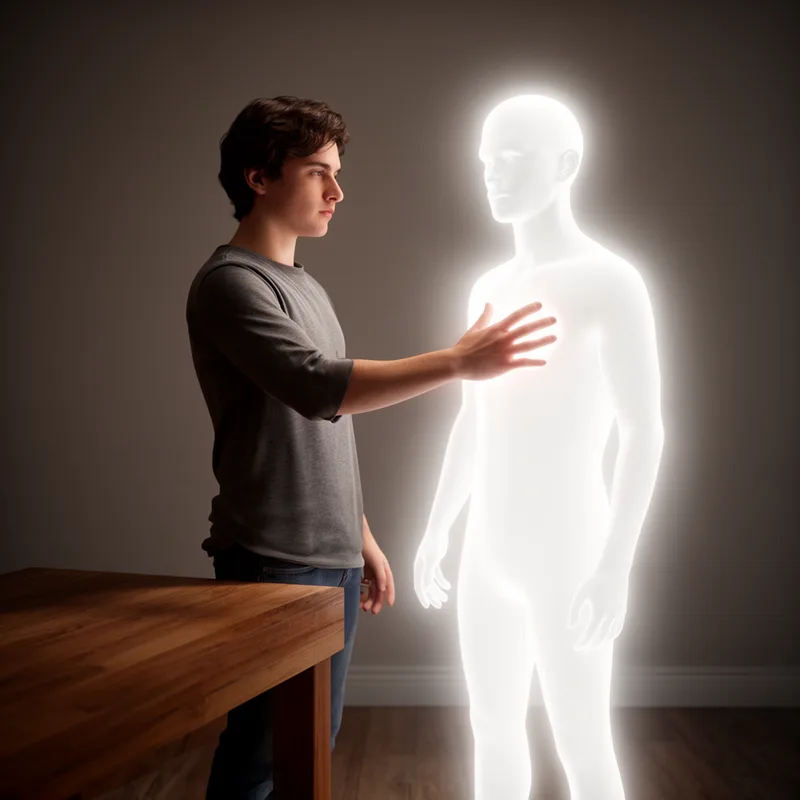
A state of having no physical body or shape

Not having a physical body or material form
A state of not being able to be touched or measured
A lack of being real, strong, or convincing
Antonyms

How Physical
3
7.9
 1
6.1
1
8.3
1
6.1
1
8.3
- Specialized
1
9.6
Surface Forms
Morphology
immateriality = immaterial (transparent) = im + material + ity
The noun form 'immateriality' is clearly derived from the adjective 'immaterial', indicating a state or quality.
Etymology
Immateriality comes from the parts in- meaning 'not' and material meaning 'matter' or 'physical stuff', so it literally says 'not matter'. Think of a ghost or a soul that has no body; that image helps explain why immateriality means 'no physical substance'.