
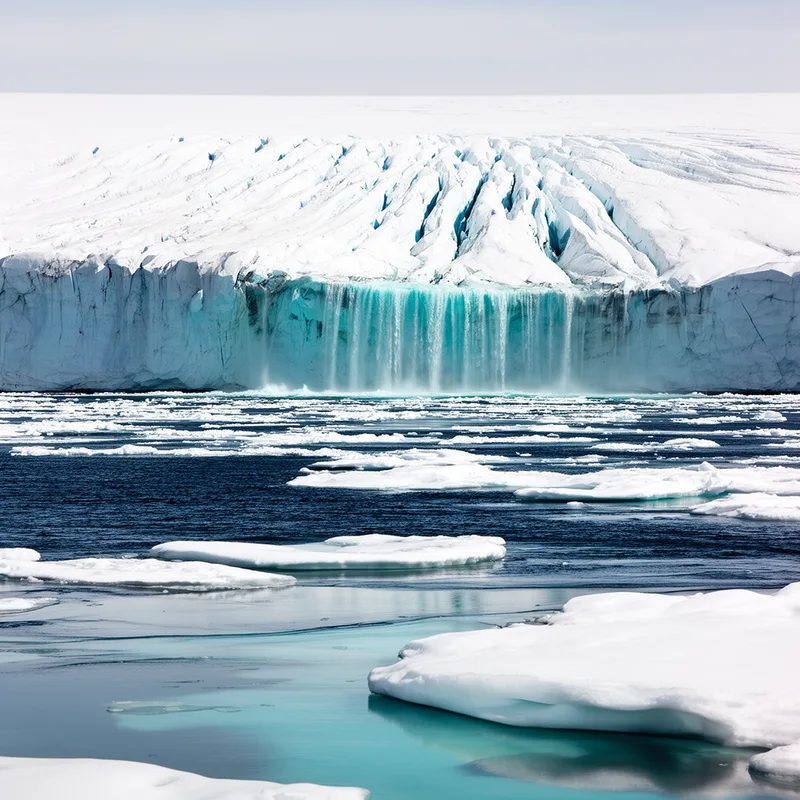
ice melt
 2
3.5
2
3.5

- noun
- Specialized
- My understanding is that Arctic sea ice melt is a manifestation of climate change, and it amplifies other warming trends.
- Arctic ice melt
Examples
-
Predictions show that continued ice melt in the Antarctic could significantly affect global sea levels by the end of the century.
-
Spectacular ice melt has been observed in the Arctic region, leading to major consequences for wildlife and ecosystems.
-
So the gas content is directly related to the intensity of the summer ice melt.
Blog text (2) -
Every year near maximum ice melt time, weather is in fact the biggest factor on Arctic sea ice.
Blog text (33) -
In the past, Stroeve has shown that ice melt has been happening far faster than the models predicted.
Blog text (2) -
A significant percentage of the world's drinking water is supplied by snow and glacial ice melt.
Blog text (17) -
The key is temperature: the timing of ice melt and its associated spring algae bloom affects everything else in the food web.
Academic text (2011) -
Recent studies indicate that the rate of ice melt in Greenland has reached alarming levels due to climate change.
Synonyms
 72
1.1
72
1.1
A process where a solid turns into a liquid because of heat
 37
1.0
37
1.0
The change from a solid to a liquid when heated
 12
2.0
12
2.0
A period when snow and ice melt because the weather is warmer
 5
2.9
5
2.9
Frozen things gradually become liquid or soft because they get warmer


 1
7.9
1
7.9
The melting and moving back of glaciers or large ice sheets from a land area
Surface Forms
Morphology
The meaning is directly and transparently derived from combining 'ice' (frozen water) with 'melt' (the process of becoming liquid), so a B1 learner who knows both words will readily infer it refers to ice turning into water or the extent/rate of that process. This is a compositional, cross-linguistically common noun phrase (process + noun) and remains understandable even in scientific contexts.
Etymology
Ice melt also names the process when ice melts, like snow or large glacier ice turning into water as the weather gets warmer. That's why scientists talk about 'ice melt' when they measure how much ice becomes water and how this can make the sea level rise.