
hypochlorous acid
- noun
- /ˌhaɪpoʊˈklɔːrəs ˈæsɪd/
- Specialized
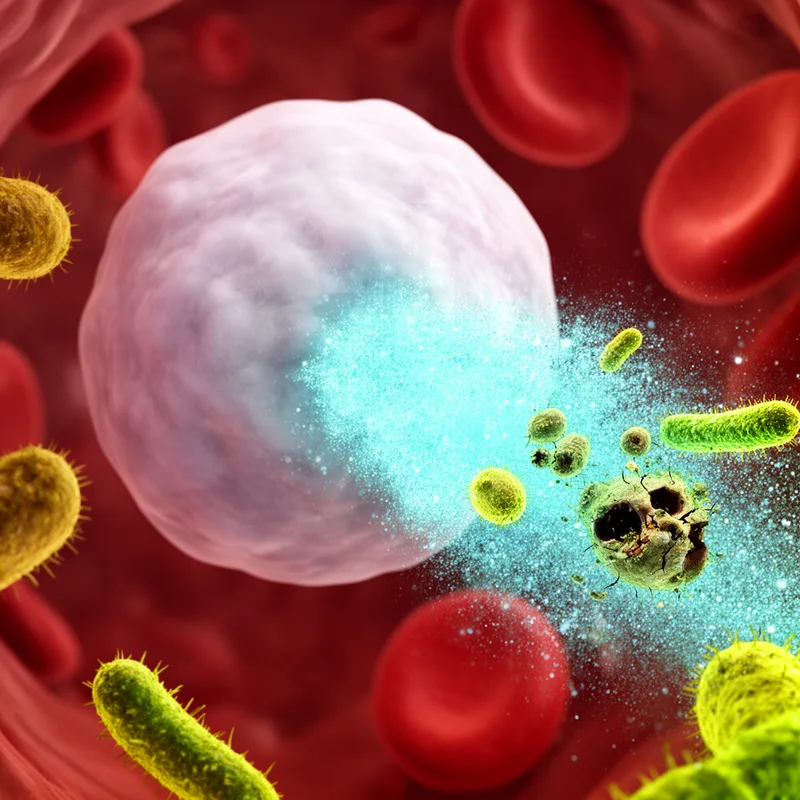
- During inflammation, hypochlorous acid is produced by neutrophils to destroy invading bacteria.
Examples
-
Topical formulations containing hypochlorous acid are used to reduce infection and promote wound healing.
-
Researchers found that low concentrations of hypochlorous acid help neutrophils kill pathogens effectively.
-
The body produces hypochlorous acid to fight infections.
-
In the immune response, hypochlorous acid helps to kill bacteria.
-
During inflammation, hypochlorous acid is produced by neutrophils to destroy invading bacteria.
-
Researchers found that low concentrations of hypochlorous acid help neutrophils kill pathogens effectively.
-
Topical formulations containing hypochlorous acid are used to reduce infection and promote wound healing.
Surface Forms
Morphology
This is a straightforward adjective+noun composition: 'hypochlorous' describes a chlorine-related chemical quality and 'acid' names the class of substance, so together they denote an acid with hypochlorous properties (HOCl). While the full biomedical specifics (e.g., production by neutrophils) are technical, the basic meaning as a chlorine-derived acid is directly derivable from the constituents and is cross-linguistically transparent.
Etymology
Hypochlorous acid is also the tiny 'bleach' that some white blood cells called neutrophils make to kill germs. That image explains why hypochlorous acid is made by neutrophils to destroy bacteria and other germs during an infection.

