
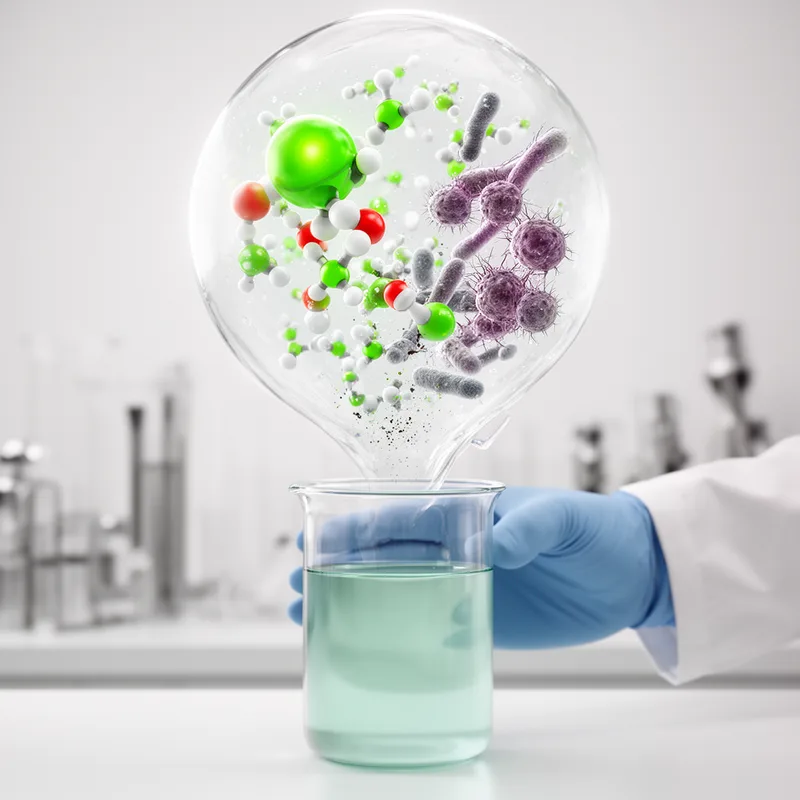
hypochlorous
- adjective
- /ˌhaɪpoʊˈklɔːrəs/
- Specialized
- This enzyme catalyzes the reaction between chloride and hydrogen peroxide to form hypochlorous acid and is indicative of inflammation.
- hypochlorous acid
Loading YouTube…
Watch on YouTubeWe're using reactive oxygen species, superoxide and hypochlorous acid to try to do in the bacteria inside the phagosome.
- We're using reactive oxygen species, superoxide and hypochlorous acid to try to do in the bacteria inside the phagosome.
Examples
-
It just says water, sodium chloride and hypochlorous acid.
-
Hypochlorous acid is often used as a disinfectant due to its ability to kill bacteria.
-
So it was a harder way to make it, but they started with the reagent Hocl hypochlorous acid.
-
The scientist explained how hypochlorous compounds can effectively eliminate pathogens in water.
-
In her research, she discovered that hypochlorous acid is produced by white blood cells to fight infections.
Compounds
- Specialized
A weak unstable acid used to bleach and disinfect water and clothes
- Specialized
A chemical made by white blood cells to kill bacteria and other germs
Surface Forms
Morphology
hypochlorous = chlorous (opaque) = hypo + chlor + ous
The word is formed by a chemical prefix plus a specialized base, but its full meaning depends on technical chemistry conventions rather than ordinary English composition.
Etymology
Hypochlorous combines the parts hypo- meaning 'less' or 'under' and chlor- from chlorine, the green chemical used to clean. So hypochlorous means a lower or weaker form of chlorine, which is why it is used in cleaners and made by white blood cells to kill germs.

