
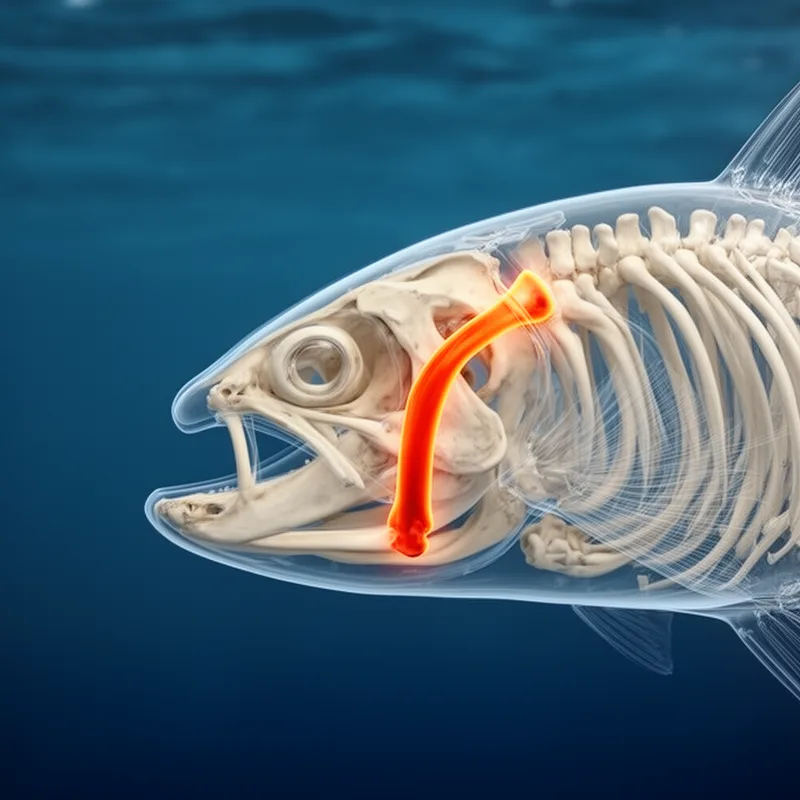
hyomandibular
- adjective
- /ˌhaɪoʊˈmændɪbjələr/
- Specialized
- In certain fishes, the hyomandibular cartilage is crucial for connecting the jaw to the skull.
Examples
-
Approximately 460 million years ago, the anterior gill arches of some aquatic vertebrates evolved into jaws and their supporting structures, including the hyomandibular bone.
Academic text (2003) -
Mainly, it developed a complexity of musculature that allowed the quadrate, articular, and hyomandibular bones to migrate to the middle ear.
Academic text (2003) -
The hyoid arch musculature was originally innervated by the post-trematic branch of the facial nerve (cranial nerve VII, the hyomandibular nerve).
Academic text (2003) -
The structure of the hyomandibular bone allows fishes to efficiently support their feeding mechanisms.
-
Studies of the hyomandibular region reveal how ancient vertebrates adapted their jaw structures.
Surface Forms
Morphology
hyomandibular = hyomandibula (semi-transparent) = hyo + mandibul + ar
The element 'mandibul' (mandible) and the adjectival suffix '-ar' are clear, but the combining form 'hyo-' is a specialized anatomical element unfamiliar to average learners.
Etymology
Hyomandibular combines hyo-, a part used in anatomy for a small throat bone, and mandibular, from Latin mandibula meaning 'jaw'. So hyomandibular describes something related to the bone that connects the 'jaw' to the skull in fish.

