
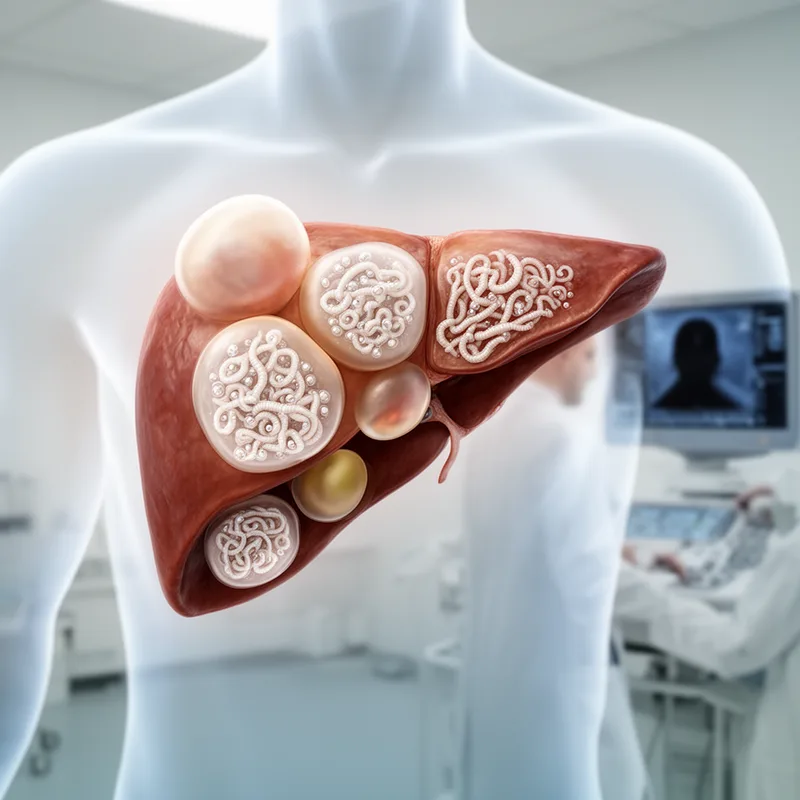
hydatid disease
- noun
- /ˈhaɪdəˌtɪd dɪˈziːz/
- Specialized
- The patient was diagnosed with hydatid disease after cysts were found in her liver.
Examples
-
Surgical removal of the cysts is one treatment for hydatid disease.
-
In many rural areas, hydatid disease remains a significant health concern due to the prevalence of sheep farming.
-
He was diagnosed with hydatid disease last year.
-
Many people are unaware of hydatid disease and its symptoms.
-
In many rural areas, hydatid disease remains a significant health concern due to the prevalence of sheep farming.
-
The patient was diagnosed with hydatid disease after cysts were found in her liver.
-
Surgical removal of the cysts is one treatment for hydatid disease.
Synonyms

A disease in which tapeworm larvae grow and form cysts in organs like the liver or lungs
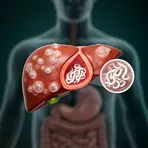
A disease caused by young tapeworms that make small pockets in organs
How Severe


Surface Forms
Morphology
The compound is compositionally transparent: 'hydatid' denotes fluid-filled cysts from tapeworm larvae and 'disease' denotes a pathological condition, so together they indicate a disease involving hydatid cysts. While the vocabulary is medical/technical, a learner who knows both constituent meanings can infer it refers to an illness caused by hydatid cysts.
Etymology
The term hydatid disease comes from an old Greek word hydatid meaning a 'watery pouch' or 'drop', because the illness makes water-filled sacs called cysts inside organs. So, hydatid disease names the condition that happens when young tapeworms form these water-like cysts in the body.