

horse chestnut
- noun
- /hɔrs ˈʧɛstnʌt/
- The horse chestnut tree in the park is famous for its beautiful flowers that bloom in spring.
- horse chestnut tree
Examples
-
The horse chestnut tree at the corner of the house pressed itself to the building like a lover, papering the walls with rustling green.
Academic text (2003) -
Should you like natural elements for the treatment of your ailments, take into account investing in a salve, cream, or lotion that contains horse chestnut.
Blog text (19) -
Children love to collect the shiny brown seeds from the horse chestnut tree during the fall.
-
The large horse chestnut beside the playground provides plenty of shade on hot summer days.
Synonyms
 1
9.1
1
9.1

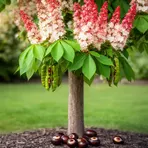
A tree with palm-shaped leaves, clusters of white to red flowers, and shiny brown seeds
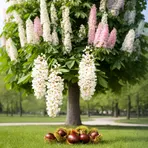
A large tree with showy white or red flower clusters and shiny brown inedible seeds
Surface Forms
Morphology
horse + chestnut
This is a straightforward compositional compound where 'horse' modifies 'chestnut' to name a particular kind of chestnut/tree. A B1 learner who knows both words will understand it denotes a type of chestnut (a specific tree/seed); they may not infer details like inedibility, but the basic referent is directly derivable from the constituents.
Etymology
Horse chestnut is called that because its shiny seeds look like real chestnuts but the tree and its nuts are not for eating. One popular story says people once used the seeds for horses, so the word 'horse' marks this as the animal kind and reminds us the nuts are 'not for eating'.