
Aesculus hippocastanum
- noun
- /ˈɛskjʊləs hɪpəˈkæstənəm/
- Specialized
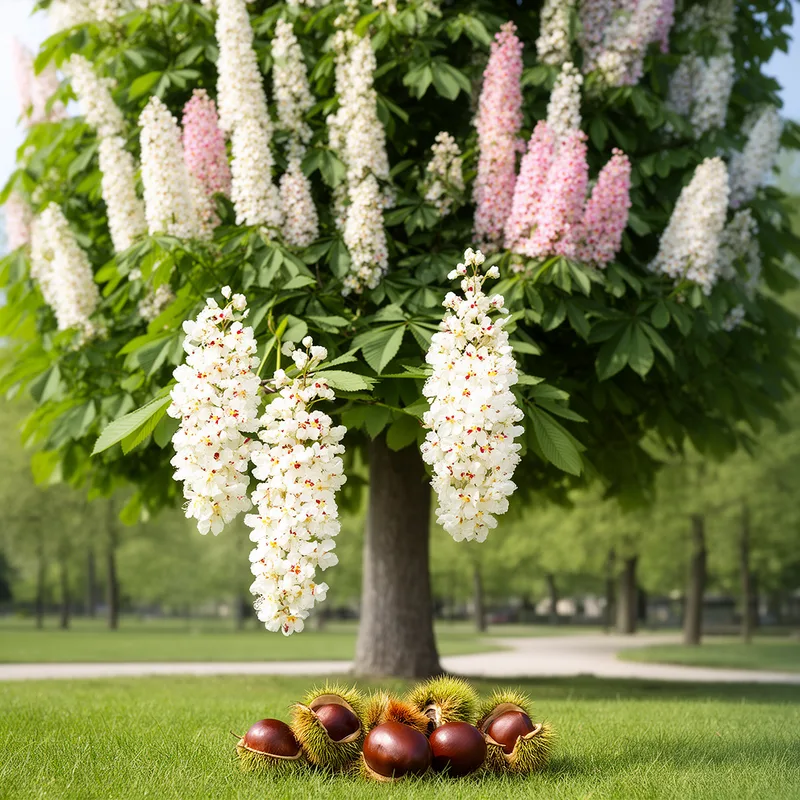
- In spring, Aesculus hippocastanum produces striking clusters of white flowers in parks across Europe.
Examples
-
The seeds of Aesculus hippocastanum are shiny and brown, but they are not edible like sweet chestnuts.
-
Many parks feature the beautiful Aesculus hippocastanum.
-
Doctors once used extracts from Aesculus hippocastanum to treat various medical conditions.
-
The Aesculus hippocastanum is a majestic tree.
-
In spring, Aesculus hippocastanum produces striking clusters of white flowers in parks across Europe.
-
Doctors once used extracts from Aesculus hippocastanum to treat various medical conditions.
-
Many parks feature the beautiful Aesculus hippocastanum that provides shade in summer.
Synonyms

A large tree with hand-shaped leaves and showy flowers that make shiny brown seeds you cannot eat
Surface Forms
Morphology
Aesculus + hippocastanum
This is a Latin binomial species name (botanical/medical jargon) rather than a normal English compositional phrase; the second element 'hippocastanum' is not a common English word and its meaning is not provided. The referent (a species/medicinal preparation from the horse‑chestnut) is specialized and cannot be reliably derived by a B1 learner from the constituents, so it is opaque.
Etymology
Aesculus hippocastanum gets its name from old parts hippo (meaning 'horse') and castanum (meaning 'chestnut') because the shiny brown seeds look like chestnuts and were long linked to horses. So the name today points to the large tree we call the 'horse chestnut'.

