
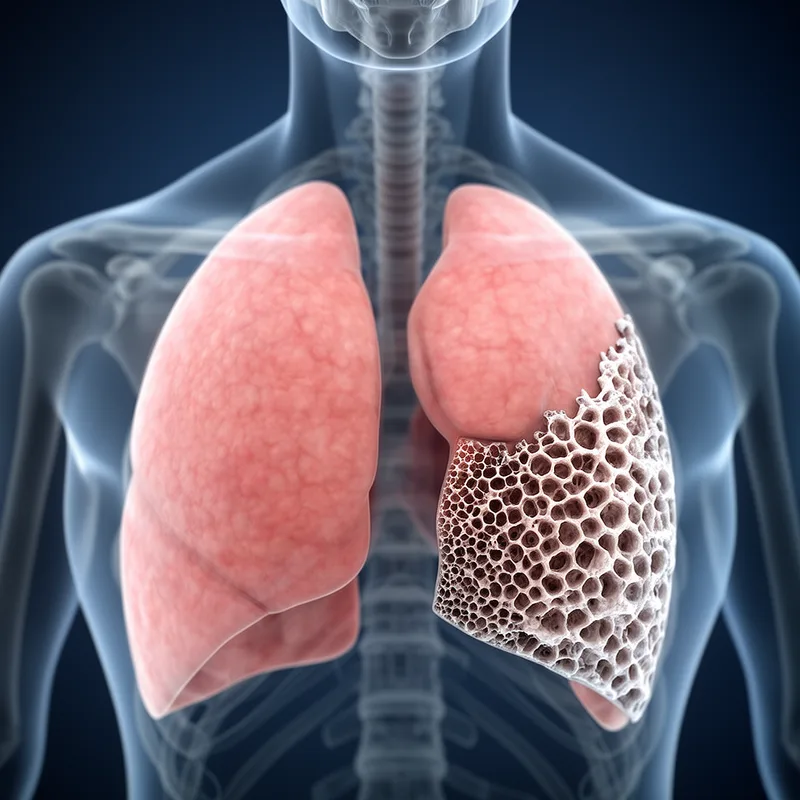
honeycombing


 1
8.8
1
8.8
- noun
- /ˈhʌniˌkoʊmɪŋ/
- Specialized
- Extensive honeycombing is often seen in cases of advanced pulmonary fibrosis.
Examples
-
Doctors use the presence of honeycombing to help diagnose chronic interstitial lung conditions.
-
The doctor explained that honeycombing is a sign of advanced pulmonary fibrosis.
-
The radiologist identified honeycombing on the patient's chest CT, suggesting severe lung disease.
-
Patients with honeycombing often experience severe respiratory issues.
-
The lung scans showed honeycombing, indicating advanced pulmonary fibrosis.
-
Doctors identified honeycombing in the patient's chest X-ray, which suggested serious lung damage.
-
Honeycombing is often seen on imaging studies of patients with long-term lung conditions.
Surface Forms
Morphology
Etymology
Honeycombing comes from the words honey and comb, where honey is 'the sweet food made by bees' and comb is 'the many small cells in a beehive'. Doctors call the pattern of many little, clustered holes in a damaged lung honeycombing because it looks like a beehive, so seeing it on a scan often means severe, long-term lung damage.