
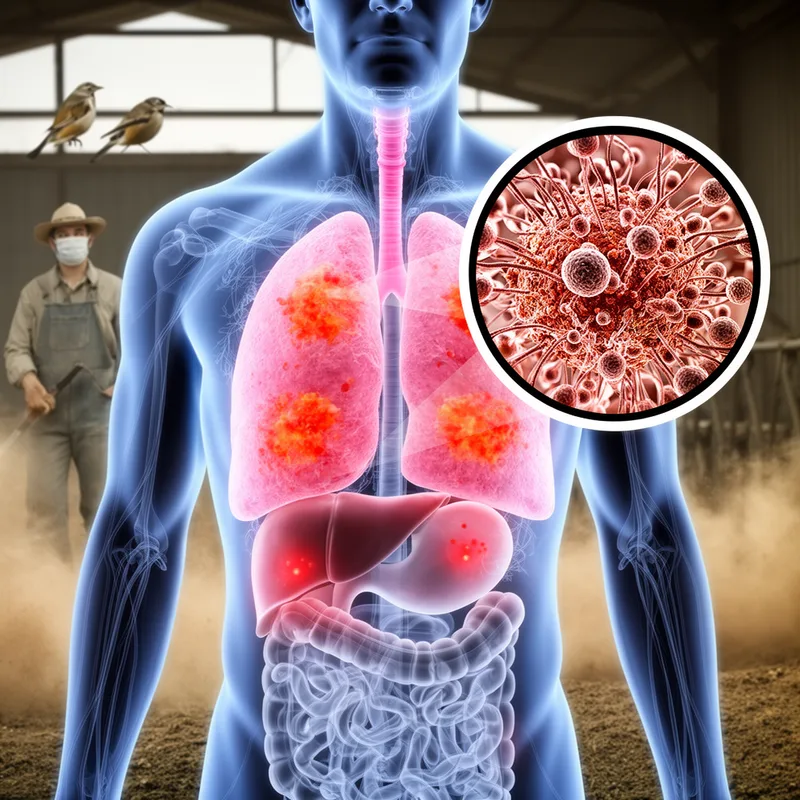
histoplasmosis
 1
9.5

- noun
- /ˌhɪstəplæzˈmoʊsɪs/
- Specialized
- Three patients were being treated for fungal infection premortem: 2 Cryptococcus meningitis and 1 disseminated histoplasmosis.
Examples
-
If left untreated, histoplasmosis can lead to serious complications, especially in individuals with weakened immune systems.
-
Two of the patients in our group who had histoplasmosis were Hispanic.
Academic text (2007) -
Use mucocutaneous candidiasis, histoplasmosis, and dermatophytes (not effective against Aspergillus species).
Academic text (2005) -
Histoplasmosis occurs in less than 1% of patients from areas of non-endemicity, where reactivation of latent infection is more likely than exogenous infection.
Academic text (2007) -
After several tests, the doctor confirmed that she was suffering from histoplasmosis, which explained her persistent cough.
-
The report highlighted an increase in cases of histoplasmosis, particularly in regions with significant bird droppings.
Synonyms
 6
3.1
An illness a fungus causes in the body, often on the skin or nails


 1
9.5
A disease in a person or animal caused by a fungus
Surface Forms
Morphology
histoplasmosis = histoplasma (opaque) = histo + plasm + osis
The disease name is built from the fungal genus name plus the medical suffix '-osis', but this technical relation is not transparent to an average B1 learner.
Etymology
Histoplasmosis comes from the fungus name Histoplasma, which is made of histo- meaning 'tissue' and -plasma meaning 'form', plus the ending -osis meaning 'disease'. So histoplasmosis literally names a disease where that fungus grows in body tissues, often in the lungs.