

fungal infection
 5
3.1
5
3.1

- noun
- /ˈfʌŋɡəl ɪnˈfɛkʃən/
- Specialized
- A fungal infection can lead to serious health issues if left untreated.
- invasive fungal infection
- pulmonary fungal infection
- systemic fungal infections
Loading YouTube…
Watch on YouTubeEating too many of them can cause symptoms like rashes, anemia, brittle hair and fungal infections.
- Eating too many of them can cause symptoms like rashes, anemia, brittle hair and fungal infections.
- Also, olive leaf not only fights viruses, it also fights bacteria and fungal infections.
Examples
-
In autopsy series performed in patients with AIDS, fungal infections with lung involvement have been reported frequently.
Academic text (2007) -
At least four forms of fungal infection of the sinonasal tract have been recognized.
Academic text (2004) -
Several reports suggest that fungal infections are associated with exposure to wood products.
Academic text (2008) -
See Box 1 for a description of examples of different types of fungal infections.
Academic text (2005) -
Avoid intimate contact with those who do not have a fungal infection to reduce transmission.
Academic text (2005) -
Her interests include the epidemiology of fungal infections and health communications.
Academic text (2014) -
Although Down syndrome is an immunodeficiency condition, fungal infection is rare in these patients.
Academic text (2008) -
The link between natural disasters and subsequent fungal infections in disaster-affected persons has been increasingly recognized.
Academic text (2014) -
A few weeks back, a patient of mine came to me with a highly aggressive form of fungal infection, the likes of which I've never seen before.
-
Mucormycosis is the third most common opportunistic fungal infection in immunocompromised and diabetic patients.
Academic text (2006)
Synonyms

 1
9.5
1
9.5
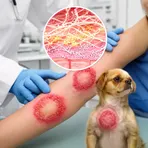
A disease in a person or animal caused by a fungus
How Harmful
- Specialized

- Specialized
7
7.3
- Specialized
- Specialized
5
3.1
- Specialized
1
6.5
Surface Forms
Morphology
The meaning is directly compositional: 'fungal' (pertaining to fungi) combined with 'infection' (an illness caused by a pathogen) clearly yields an infection caused by fungi. This is a literal, cross-linguistically common construction, so a B1 learner who knows both constituents will readily infer the MWE's meaning.
Etymology
Fungal infection The compound noun fungal infection joins the words fungal and infection. Fungal comes from the word 'fungus', meaning mould or small mushrooms, and infection means something enters the body and causes illness, so picture mould or tiny mushroom-like growth on the skin to remember it means a 'disease' caused by fungus.