
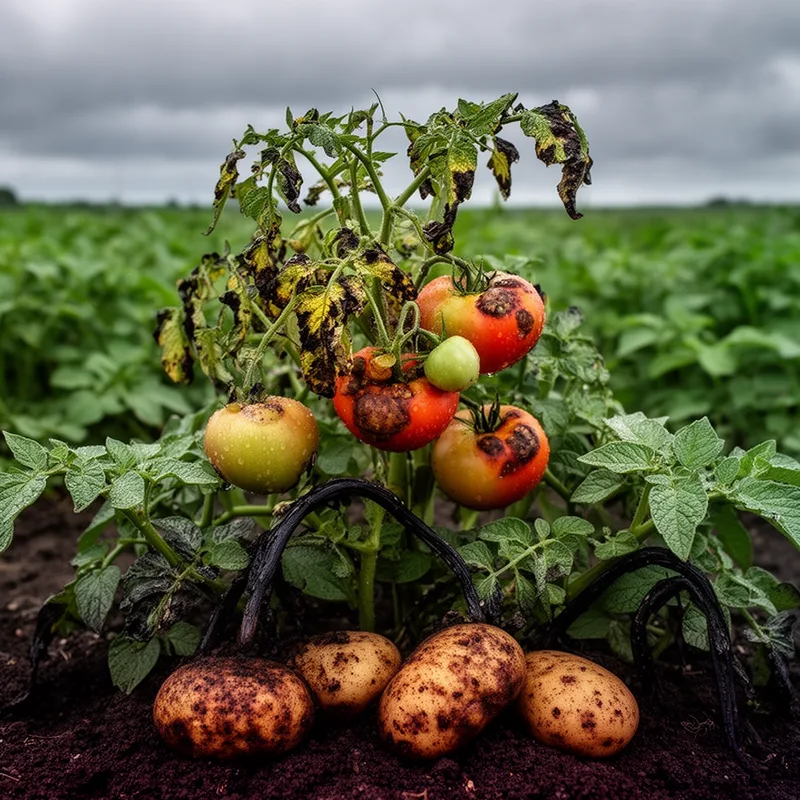
late blight
- noun
- /leɪt blaɪt/
- Specialized
- Plant pathologist Ken Deahl examines a potato damaged by late blight fungus.
- late blight in potato
- strains of late blight
- late blight fungus
Loading YouTube…
Watch on YouTubeB Farmers used kelp that had not had the salt water washed off CA disease called late blight, which caused potatoes to turn soft and rot.
- B Farmers used kelp that had not had the salt water washed off CA disease called late blight, which caused potatoes to turn soft and rot.
Examples
-
In high-risk areas, it is important to plant late blight-resistant varieties of tomatoes to prevent crop loss.
-
Everything is doing well, I tell him, but I'm worried about late blight in the tomatoes.
Fiction book (1990) -
In addition to potato plants, it works on tomato plants, which are also victims of late blight.
Academic text (1997) -
Just how devastating are these new strains of late blight?
Academic text (1997) -
It's the most destructive disease of potatoes worldwide, and late blight also affects tomatoes.
Academic text (1994) -
The scientists are now readying a potato that is remarkably resistant to the late-blight fungus.
Academic text (2003) -
"In 1993 yield tests, the new resistant selections yielded as well as standard varieties and had superior late blight resistance," she says.
Academic text (1994) -
"In the 25 years that I've worked with late blight, I've never seen blight attack tubers like these new strains do," he says.
Academic text (1997) -
Late blight can spread rapidly in warm, humid conditions, leading to significant damage to potato crops.
-
Farmers should monitor their fields closely for signs of late blight, as early detection can help save the harvest.
Synonyms
 7
7.3
7
7.3

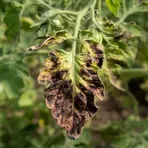
A plant disease that makes leaves and stems die without rotting


 1
4.5
1
4.5
A disease that makes tomato leaves, stems or fruit rot
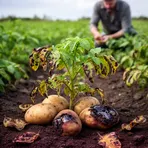
A plant disease that makes potato leaves and potatoes rot

A disease caused by a fungus that makes potatoes rot in fields
How Harmful
- Specialized

- Specialized
7
7.3
- Specialized
- Specialized
5
3.1
- Specialized
1
6.5
Surface Forms
Morphology
The meaning is directly and compositionally derived from 'late' (occurring near the end) + 'blight' (a plant disease): it refers to a blight that appears late in the growing season. This straightforward noun–modifier combination follows normal English compounding and is cross-linguistically transparent, so a B1 learner who knows both constituents should be able to infer the meaning.
Etymology
Late blight comes from a simple farming picture: the disease appears late in the growing season and blight means it quickly kills or damages leaves and potatoes, so today the name refers to this serious plant disease.