
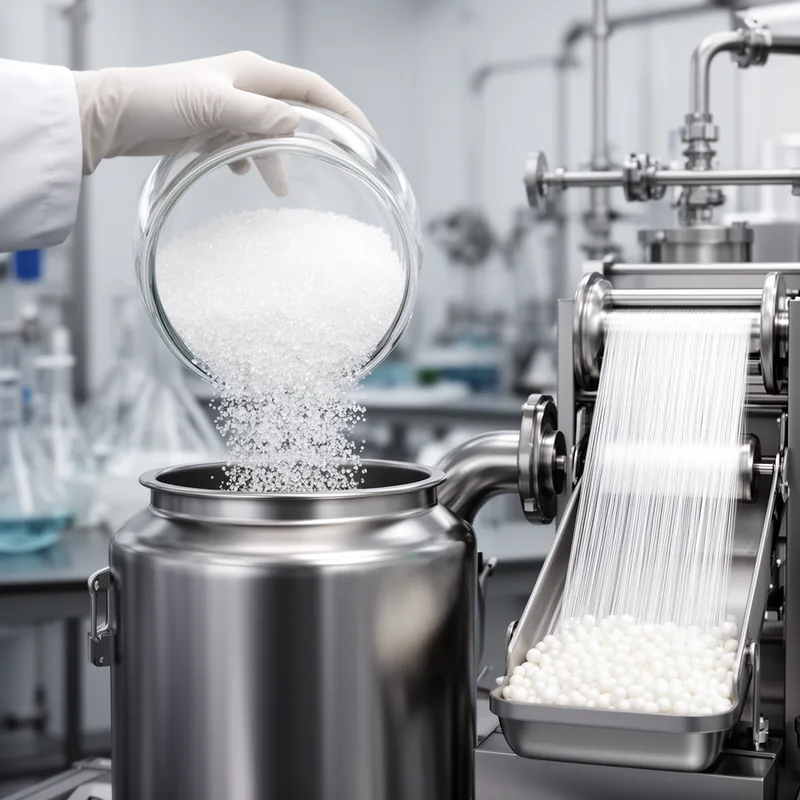
hexanedioic acid
- noun
- /ˌhɛksənˈdaɪəʊɪk ˈæsɪd/
- Specialized
- Hexanedioic acid is a key raw material in the production of nylon 6,6 fibers.
Examples
-
The chemical formula for hexanedioic acid is C6H10O4.
-
The laboratory synthesized pure hexanedioic acid using an oxidation reaction.
-
Industries often store hexanedioic acid in large quantities for polymer manufacturing.
-
Many manufacturers use hexanedioic acid in the production of nylon.
-
Hexanedioic acid is an essential ingredient in the manufacture of nylon and various polyamides.
-
In the textile industry, hexanedioic acid is widely used to produce high-strength synthetic fibers.
-
To create durable plastics, many companies incorporate hexanedioic acid into their formulations.
Synonyms


 1
6.3
A white acid that forms crystals and is used to make nylon and other plastics
A chemical found in cork with eight carbon atoms used to make plastics and resins
Surface Forms
Morphology
hexanedioic + acid
The compound term is technical chemical nomenclature: while 'acid' is a common word, 'hexanedioic' is a specialised morphological construction (hexa- = six, -dioic = two carboxyl groups) that a B1 learner would not reliably parse. Because understanding the MWE requires specific knowledge of chemical affixes and nomenclature rather than ordinary compositional meaning, the expression is not transparently interpretable by average learners.
Etymology
The chemical hexanedioic acid comes from two parts: hexane meaning 'six' carbons and dioic acid meaning 'two' acid ends. Imagine a six-link chain with two sticky ends that can hook to other pieces to make long 'nylon' threads, so the acid helps make 'nylon'.