
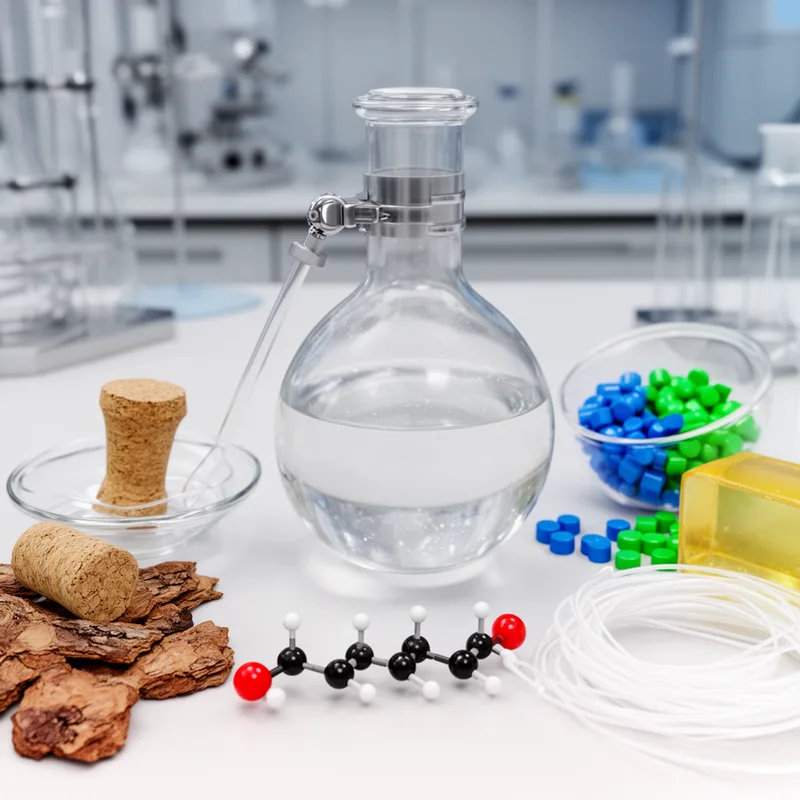
octanedioic acid
- noun
- /ˌɑkˌteɪnˈdiːoʊɪk ˈæsɪd/
- Specialized
- The researcher isolated octanedioic acid from pieces of natural cork.
Examples
-
Synthesis of nylon can involve the use of octanedioic acid as a monomer.
-
The properties of octanedioic acid make it useful in the creation of specialty plastics.
-
The chemist studied octanedioic acid for its unique properties.
-
Many polymers are derived from octanedioic acid.
-
Synthesis of nylon can involve the use of octanedioic acid as a monomer.
-
The properties of octanedioic acid make it useful in the creation of specialty plastics.
-
Many polymers are derived from octanedioic acid.
Synonyms
A chemical found especially in cork used to make plastics and other chemicals
Surface Forms
Morphology
octanedioic + acid
The compound name is morphologically compositional (octan- = eight carbons; -dioic = two carboxyl groups; acid = acid), so its technical meaning can be derived by someone with chemistry/morphological knowledge. However 'octanedioic' is a specialized, non-dictionary morphological form that a B1 learner is unlikely to recognise or parse fully; the dicarboxylic nuance is technical rather than immediately obvious. Because the relation is partly transparent (numeric and acid components) but requires specialist knowledge for full interpretation, it is best classified as semi-transparent.
Etymology
Octanedioic acid gets its meaning from its name: octan- means 'eight', di- means 'two', and acid is an acid, so picture a chain of eight carbon links with acid groups on both ends. Because it has two acid ends, it can join with other chemicals to form long chains, which is why it is used to make plastics and resins.

