
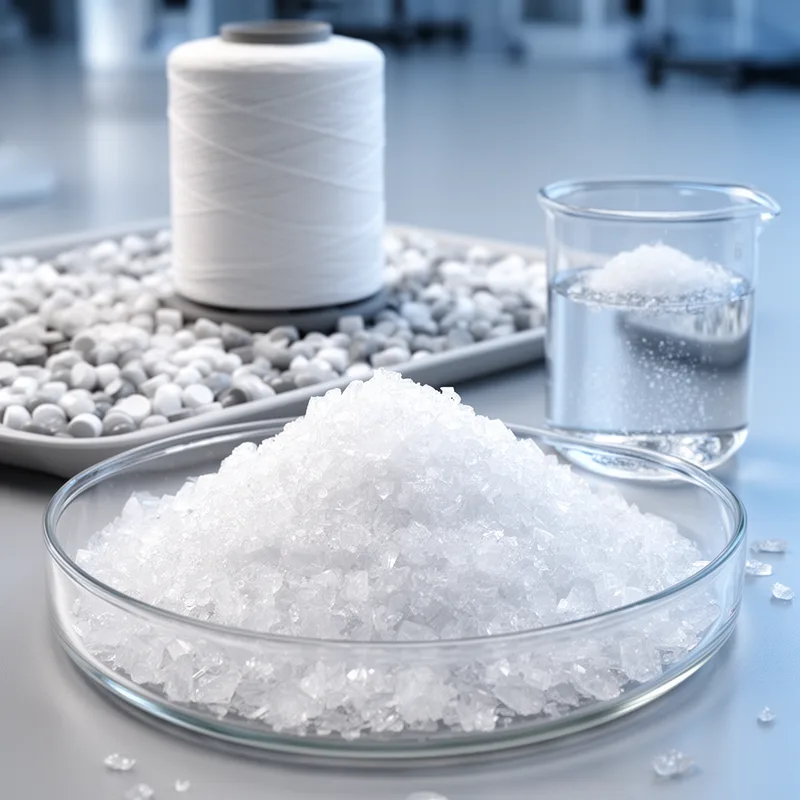
adipic acid


 1
6.3
- noun
- /əˈdɪpɪk ˈæsɪd/
- Specialized
- The laboratory was filled with samples, and among them was pure adipic acid in its crystalline form.
Examples
-
Pure adipic acid appears as white crystals that dissolve easily in water.
-
Researchers studied the environmental impact of adipic acid in industrial wastewater.
-
The production of nylon relies heavily on adipic acid as a key ingredient.
-
The chemical formula for adipic acid is C6H10O4.
-
Many industries rely on adipic acid for producing nylon.
-
Adipic acid is a key ingredient in the production of nylon, which is widely used in textiles.
-
Adipic acid is commonly used in the manufacturing of synthetic polymers.
Synonyms
A chemical used mainly to make nylon and similar plastics
Surface Forms
Morphology
The phrase follows a compositional pattern 'X acid' so a learner who knows 'acid' can infer it is a kind of acid, but the modifier 'adipic' is a specialized, technical lexical item that does not transparently reveal the specific chemical identity or properties to a B1 learner. Cross-linguistically similar formations exist (e.g. Spanish 'ácido adípico'), allowing partial inference (type = acid) but the full, specific meaning requires technical knowledge or exposure.
Etymology
Adipic acid gets its name from the old Latin word 'adeps' meaning 'fat', so the part adip- points to fat and acid shows it is an acid. Chemists first made it from fats, and that image helps you remember that adipic acid is the acid used to make the plastic 'nylon'.