

hexahedral
- adjective
- /ˌhɛksəˈhɛdrəl/
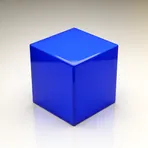
- A cube is a common example of a hexahedral shape because it has six square faces.
Examples
-
In geometry class, we learned that a hexahedral object can be formed by six rectangles.
-
Use it to create triangular, quadrilateral, prismatic, tetrahedral, pyramidal, and hexahedral cells in one grid.
Academic text (2004) -
The hexahedral design of the building features six distinct walls that create a unique look.
Synonyms
 8
3.8
8
3.8

Having the shape of a cube with equal length, width, and height
 1
4.3
1
4.3
Shaped like a cube
 1
3.2
1
3.2
A shape like a box with six equal square sides and right angles

Shaped like a cube
How Many Faces


Surface Forms
Morphology
hexahedral = hexahedron (semi-transparent) = hexa + hedron + al
The word is regularly formed from the technical base 'hexahedron' plus the adjectival suffix '-al', but the classical combining elements are not part of everyday vocabulary.
Etymology
Hexahedral comes from Greek parts hex- meaning 'six' and -hedron meaning 'face' or 'base', the same hex- you see in hexagon. So something hexahedral has six flat faces, like a cube.