
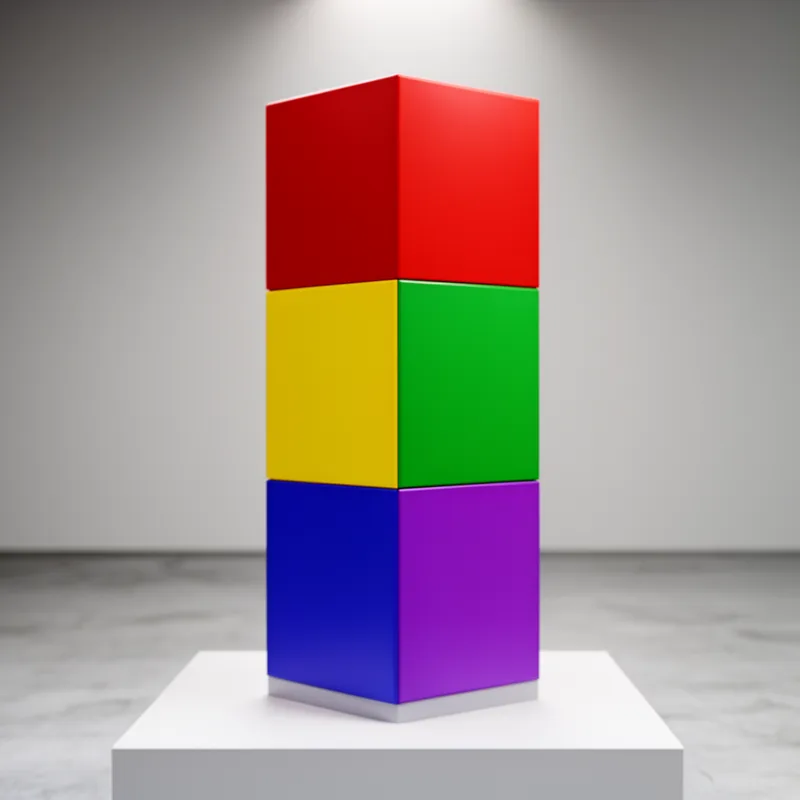
hexahedral
- noun
- /ˌhɛksəˈhɛdrəl/
- Specialized
- I think a couple more slides we get another pentahedron and then starting to get hexahedra other than the cube, lots of them.
- hexahedral elements
Examples
-
We discretize the bar into 2,560 tri-linear hexahedral elements, each with eight Gauss points.
Academic text (2018) -
A total of 352 20-noded hexahedral elements (with reduced integration - 8 Gauss points) are employed, resulting in a mesh with 1,877 nodes.
Academic text (2018) -
The discretization is shown in Fig. 5b, where 576 20-noded hexahedral elements with reduced integration have been used, yielding a mesh with 3,589 nodes.
Academic text (2018) -
The 3D model consists of several hexahedral elements that accurately represent the shape of the structures.
-
In computer graphics, we often use hexahedral shapes to create realistic simulations of solid objects.
-
The analysis required the use of multiple hexahedral components to achieve a precise numerical solution.
Synonyms

A solid shape with six flat faces
Surface Forms
Morphology
hexahedral = hexahedron (semi-transparent) = hexa + hedron + al
The word is regularly formed from the technical base 'hexahedron' plus the adjectival suffix '-al', but the classical combining elements are not part of everyday vocabulary.
Etymology
Hexahedral comes from Greek parts hex- meaning 'six' and -hedron meaning 'face' or 'base', the same hex- you see in hexagon. So a hexahedral is a solid with six flat faces, like a cube.

