

cubiform
- adjective
- /ˈkjuːbɪfɔrm/
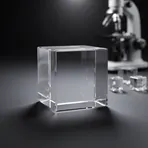
- The crystal has a distinctly cubiform appearance under the microscope.
Examples
-
The mineral's cubiform structure makes it easy to identify among other samples.
-
Architects sometimes design cubiform buildings to create a modern look.
-
Look at that cubiform building in the distance!
-
The cubiform blocks were used to build the modern structure.
-
The crystal has a distinctly cubiform appearance under the microscope.
-
The mineral's cubiform structure makes it easy to identify among other samples.
-
The cubiform blocks were used to build the modern structure.
Synonyms
 8
3.8
8
3.8

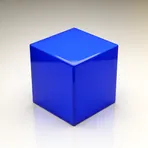
Having the shape of a cube with equal length, width, and height

 1
3.2
1
3.2
A shape like a box with six equal square sides and right angles

 1
3.0
1
3.0
Shaped like a box with flat sides and straight corners

Having six flat square sides and sharp corners like a box

Shaped like a cube
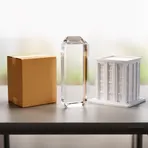
Having the shape of a cube or a rectangular box

Having six flat faces like a cube
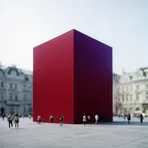
Shaped like a solid box with straight edges
How Cubic
 5
3.2
5
3.2
Surface Forms
Morphology
Etymology
Cubiform combines cube and -form, where cube is the familiar solid and -form means 'shape'. So cubiform means 'having the shape of a cube', which is why we use it for cube-shaped buildings or crystals.