
hereditary motor and sensory neuropathy
- noun
- /həˈrɛdɪˌtɛri ˈmoʊtər ənd ˈsɛnʃəri njuˈrɑːpəθi/
- Specialized
- The doctor diagnosed her with hereditary motor and sensory neuropathy after she showed signs of progressive muscle weakness.
Examples
-
Patients with hereditary motor and sensory neuropathy often lead active lives despite muscle atrophy.
-
Individuals diagnosed with hereditary motor and sensory neuropathy may notice symptoms like difficulty in hand movements.
-
Hereditary motor and sensory neuropathy can present in families with a history of neurological disorders.
-
He was diagnosed with hereditary motor and sensory neuropathy at a young age.
-
Many people with hereditary motor and sensory neuropathy lead normal lives.
-
Hereditary motor and sensory neuropathy can lead to challenges in mobility due to muscle weakness in the legs.
-
After years of treatment, she learned to manage her hereditary motor and sensory neuropathy effectively.
Synonyms

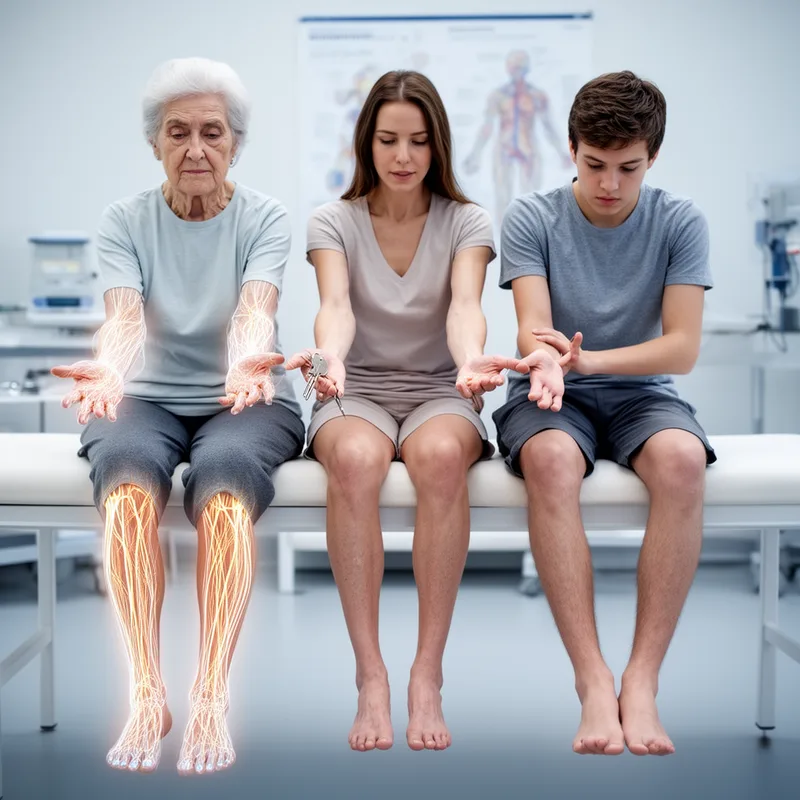
A nerve disease that runs in families and makes the muscles of the hands and lower legs weak and thin
Surface Forms
Morphology
hereditary + motor + and + sensory + neuropathy
Each constituent directly contributes to the overall meaning: 'hereditary' indicates genetic transmission, 'motor and sensory' specifies the types of nerve function affected, and 'neuropathy' denotes a nerve disease. The phrase is a literal, technical combination of these parts, so a learner who knows the component meanings can reconstruct that it refers to a genetically transmitted nerve disorder affecting both movement and sensation.
Etymology
Hereditary motor and sensory neuropathy breaks into parts: hereditary means 'passed in the family', motor means 'movement', sensory means 'feeling', and neuropathy means 'nerve disease'. So it describes a nerve illness families pass on that slowly weakens the muscles used for movement and feeling, while people often have a normal life span.

