

her
 ∞
1.0
∞
1.0

- pronoun
- /hɜr/
- No, you have to bring her back.
- tell her
- make her
- get her
Loading YouTube…
Watch on YouTubeMy gosh, I've known her for a decade now.
- My gosh, I've known her for a decade now.
- They did a montage of her in the wheelchair.
- We told her and she looked at us.
- And she had earrings, like on her, like on the sides of her.
- But yeah, she's got two teachers who, who look after her and.
- Always Jlo, like, I used to call her Miss, Miss Lopez.
- Doesn't matter what life threw at her, she was always positive.
- He doesn't just want her, he needs her lost.
Examples
-
But I broke up with her at New Year's.
-
Plus, why would you give her this dress?
-
We told her and she looked at us.
-
I think it's just best for her, OK.
-
And I'm in love with her but she has no idea.
-
Why do you have to ruin her dreams, too?
-
I don't want her to get lonely.
-
My gosh, I've known her for a decade now.
-
She's thankful that modern science has allowed her to keep doing the things she loves.
Academic text (2011) -
I think Jane will love this gift; it suits her personality perfectly.
Idioms


In a very urgent and determined way as if everything depended on it





- Informal
Someone people blame or dislike after they do something others do not like

- Offensive
A person who acts as if they are perfect and better than others

- Informal
Doing something risky and foolish that will likely make you lose money or get into trouble


Ask a woman to look at your art as a joke that suggests romantic or sexual interest

Compounds


- Baby Talk
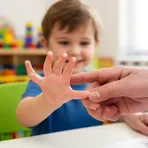
A simple game for children using the thumb and four fingers to help them move well

Surface Forms
Etymology
Her comes from the old English form hire, originally meaning 'to/for her', and it became the object form of she. So when you say 'I called her', you use her to mean the female person who receives the action.