

her ladyship
 5
8.5
5
8.5

- noun
- UK
- When her ladyship entered the room, everyone stood up to greet her.
- her ladyship said
- her ladyship will come
- called her ladyship
Examples
-
"Wedding gifts," her ladyship said briefly.
Fiction book (1994) -
"Perhaps her ladyship will let you ride one of those.
Fiction book (1990) -
It's lucky for us her Ladyship was so understanding.
-
It's wonderful... that her ladyship should be out there.
-
What does Her Ladyship call you?
-
Her ladyship is not at home.
Fiction book (1991) -
And where will your Lordship and her Ladyship be staying?
-
Well, if it isn't her ladyship.
-
Her ladyship's not here.
-
Her ladyship is right.
Synonyms
 790
2.5
790
2.5
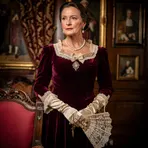
A woman who has a noble title in Britain, for example the wife or female partner of a lord
 360
3.2
360
3.2
A polite way to address a woman in a position of authority
 20
9.6
20
9.6
A polite title for a woman of noble rank like a countess
 20
7.5
20
7.5
A woman who has the title of baron or is married to a baron
 13
6.9
13
6.9
A woman given an official title for important public service
 13
9.9
13
9.9
A polite old-fashioned way to speak to a woman of noble rank
 2
5.8
2
5.8
A woman from a high social class who has a title
 1
9.9
1
9.9
A woman with a noble title who is married to a viscount or who holds the same title herself

A woman who has a noble title, often in Britain, or a woman whose husband was a noble
How Polite

Surface Forms
Morphology
The phrase is a simple possessive determiner + title: 'her' (possessive) + 'ladyship' (a form of address for a noblewoman), so the meaning — referring politely to a specific woman of rank — is directly derivable from the constituents. This compositional possessive-title pattern is common in English and in many languages, so a B1 learner who knows both words would understand the expression.
Etymology
Her Ladyship comes from old British manners where people used formal words to show respect; they said 'Her' for a woman, 'Lady' for a noble woman, and the ending 'ship' showed her 'position'. So today Her Ladyship is a polite, formal way to address or refer to a woman with the rank of 'lady'.