

hepatocellular carcinoma


 1
8.3
1
8.3
- noun
- /ˌhɛpətoʊˈsɛljələr ˌkɑːrsɪˈnoʊmə/
- Specialized
- The doctor diagnosed him with hepatocellular carcinoma after reviewing the liver biopsy results.
- hepatocellular carcinoma patients
- cirrhosis and hepatocellular carcinoma
- hepatocellular carcinoma on cirrhotic liver
Examples
-
Primary liver cancers, including hepatocellular carcinoma (HCC), are the second leading cause of cancer-related death worldwide and are increasing in incidence.
Academic text (2017) -
The strong association of persistent HBV infection and hepatocellular carcinoma (HCC) is intriguing, yet poorly understood.
Academic text (1994) -
Autopsy results were only available for 10 patients with hepatocellular carcinoma.
Academic text (2007) -
The complication rate is low, except in patients with hepatocellular carcinoma on cirrhotic liver.
Academic text (2007) -
In addition, both of them can inhibit hepatocellular carcinoma cell growth, migration, and invasion, but via different signaling pathways.
Academic text (2017) -
Mutations of the p53 gene are frequently found in hepatocellular carcinoma (HCC).
Academic text (1991) -
For example, in patients with severe fibrosis, the incidence of hepatocellular carcinoma was 1% per year over an 8-year follow-up (3).
Academic text (2014) -
Patients with persistent active viral replication are at greater risk of death from liver disease or hepatocellular carcinoma (HCC) than those with inactive disease.
Academic text (1994) -
In another study, the plasma levels of miR-101 were observed to be significantly lower in hepatocellular carcinoma patients harboring distant metastasis as compared to those with early-stage disease.
Academic text (2016) -
The objective of treatment is to prevent hepatocellular carcinoma and/or decompensated cirrhosis (manifestations of end-stage liver disease).
Academic text (2014)
Synonyms
 8
2.7
8
2.7
A serious liver disease in which cells grow too fast and form a harmful lump
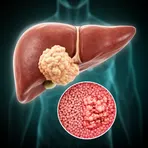 1
9.8
1
9.8
A cancer in the liver that starts in liver cells
 1
3.3
1
3.3
Cells in the liver grow out of control and form a dangerous lump
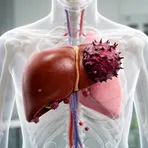
A cancerous tumor in the liver that can spread to other parts
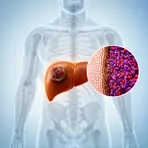
A cancer that starts in the liver cells
Antonyms


Surface Forms
Morphology
The term is transparently compositional: 'hepatocellular' specifies liver cells and 'carcinoma' denotes a cancerous tumor, so together they indicate a tumor originating in liver cells. This follows standard medical naming morphology (common across languages), so a learner who knows both constituents can reasonably infer the meaning.
Etymology
Hepatocellular carcinoma is a medical name made from parts that tell its meaning: hepato- means 'liver', cellular means 'cell', and carcinoma means 'cancer'. So it refers to a 'cancer' that starts in the main 'cells' of the 'liver'.