
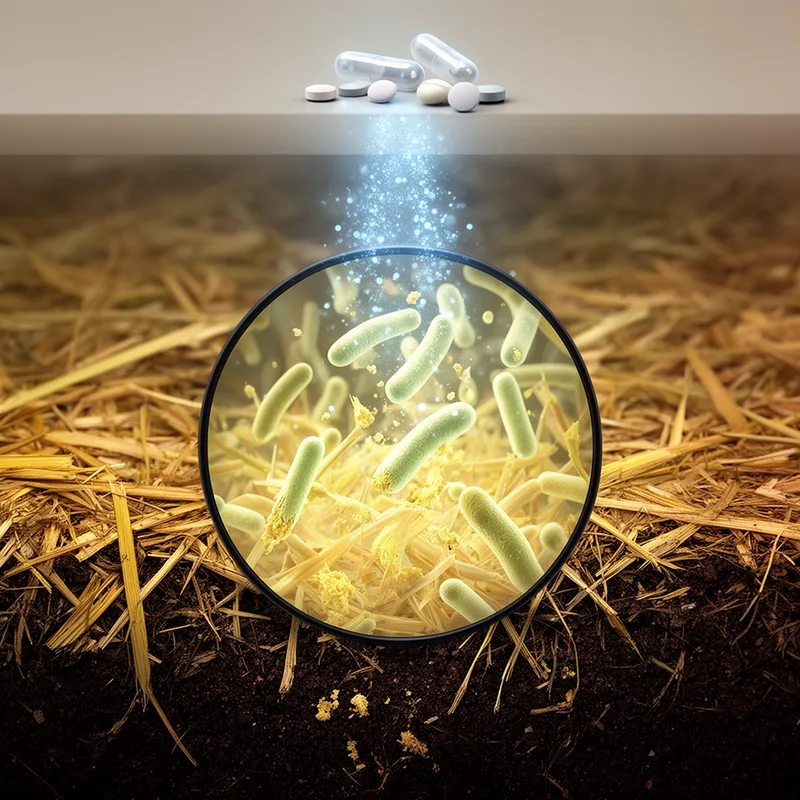
hay bacillus
- noun
- /heɪ bəˈsɪləs/
- Specialized
- The scientist isolated the hay bacillus from a sample of decomposing grass.
Examples
-
Some antibiotics are derived from certain strains of hay bacillus.
-
The hay bacillus plays a significant role in breaking down organic material in soil.
-
The hay bacillus is essential for soil health.
-
Some hay bacilli can produce antibiotics.
-
The hay bacillus helps decompose organic matter, enriching the soil with nutrients.
-
Researchers discovered that the hay bacillus can produce natural antibiotics.
-
In agricultural studies, the hay bacillus was found to improve soil fertility.
Synonyms
Small rod-shaped bacterium often found in soil that scientists use in research and industry
A common soil bacterium that helps plants grow and can make antibiotics
Surface Forms
Morphology
The compound combines a clear modifier 'hay' (dried grass) with the head noun 'bacillus' (a rod-shaped bacterium), so its basic meaning — a bacterium associated with hay or decaying plant matter — is directly derivable from the constituents. This noun+noun compositional pattern is common and cross-linguistically transparent, so a B1 learner who knows both words would readily infer the intended referent (the specific species detail is specialist knowledge beyond the transparent compositional core).
Etymology
Hay bacillus comes from bacteria often found in old hay and decaying plants, and bacillus simply means 'a kind of bacteria'. These tiny organisms help break down plant material and some strains make antibiotics, so the name now refers to the common soil bacterium 'Bacillus subtilis'.

