

grass bacillus
- noun
- /ɡræs bəˈsɪləs/
- Specialized
- Some antibiotics are commercially produced from strains of the grass bacillus.
Examples
-
The grass bacillus can be isolated from soil samples in many environments.
-
Researchers studied how the grass bacillus interacts with plant roots to promote growth.
-
The grass bacillus is essential for soil health.
-
Many farmers rely on grass bacilli to enhance crop growth.
-
Researchers studied how the grass bacillus interacts with plant roots to promote growth.
-
Some antibiotics are commercially produced from strains of the grass bacillus.
-
The grass bacillus can be isolated from soil samples in many environments.
Synonyms

A common soil bacterium that breaks down dead plants and sometimes makes antibiotics
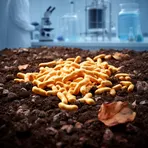
Small rod-shaped bacterium often found in soil that scientists use in research and industry
Surface Forms
Morphology
This is a straightforward noun+noun compound where 'grass' (the plant) modifies 'bacillus' (a rod-shaped bacterium), so the meaning — a bacterium associated with grass/soil — is directly derivable from the parts. The compositional naming pattern is common across languages and standard scientific nomenclature, making it readily understandable to a learner who knows both constituent words.
Etymology
The term grass bacillus comes from a simple picture: grass shows where it is often found and bacillus is a word for a little 'rod' shaped 'bacterium'. So the name means a species of bacterium that lives in soil and on grass.

