

handicap
 56
7.8
56
7.8

- noun
- /ˈhændɪˌkæp/
- Slur
- Since that time , it had become a clinic for kids with a variety of different physical handicaps .
- students with handicaps
- children with handicaps
- physical handicap
Loading YouTube…
Watch on YouTubeBut OK, my opening joke, I parked in the handicap spot.
- But OK, my opening joke, I parked in the handicap spot.
Examples
-
Vice President Helen Du Pray had overcome many handicaps to achieve such high office.
Fiction book (1990) -
We also learned that special education teachers of children with emotional handicaps generally have little contact with school psychologists.
Academic text (1991) -
The law also requires that students with handicaps receive instruction from qualified individuals.
Academic text (1991) -
Some students may have multiple handicaps that make orientation and mobility instruction inappropriate.
Academic text (1990) -
The categories of handicaps included in PL 94-142 now apply to children ages three through five.
Academic text (1991) -
The standardization sample included children with learning disabilities, behavior disorders, and mental handicaps, but no children with autism.
Academic text (1999) -
Through instructional modification, the needs of students with handicaps are met by changing and improving instruction for all students.
Academic text (1991) -
Public Law 94-142 mandates that children with handicaps be educated in the Least Restrictive Environment (LRE).
Academic text (1991) -
Many children face challenges due to a physical handicap, which can affect their mobility and participation in sports.
-
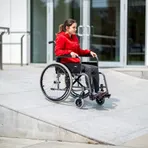
She was born with a severe handicap that required her to use a wheelchair for most of her life.
Synonyms
 398
3.5
398
3.5
A physical or mental condition that limits a person's movements, senses and daily activities
 62
6.1
62
6.1
A loss of ability caused by damage or other problems

A condition in which someone cannot do normal daily activities because of a physical or mental problem
Antonyms


Compounds

- Jargon
A bet that gives a weaker competitor a head start to make the contest more even
How Severe

Surface Forms
Etymology
Handicap comes from an old English game called hand-in-cap, where people put a hand in a cap to make a fair trade; the idea of something that makes the trade even later became used for a condition that makes life harder. So a 'handicap' came to mean a physical or mental condition that limits what a person can do, though many now prefer the word 'disability'.