

to handfast
- verb
- /ˈhændˌfæst/
- Archaic
- They decided to handfast under the ancient oak tree.
Examples
-
They chose to handfast in a private ceremony, exchanging vows and tokens.
-
In ancient times, couples would handfast before a priest as a sign of their engagement.
-
The tradition to handfast was once common in rural communities before official marriage ceremonies.
-
The couple handfasted in a beautiful ceremony last summer.
-
In ancient times, couples would handfast in front of their families to signify their commitment to one another.
-
The two lovers decided to handfast in a quaint ceremony held during the spring festival.
-
During the celebration, the couple chose to handfast, binding themselves together with promises of love and loyalty.
Synonyms

 11
9.6
11
9.6

To promise two people will marry each other in the future
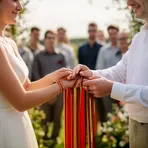
To join hands in a traditional ceremony to promise to marry each other

To formally promise that two people will marry
Surface Forms
Etymology
Handfast as a verb comes from putting hand and fast together to mean 'to join hands firmly' as a pledge. So to handfast someone was to promise to marry them.