
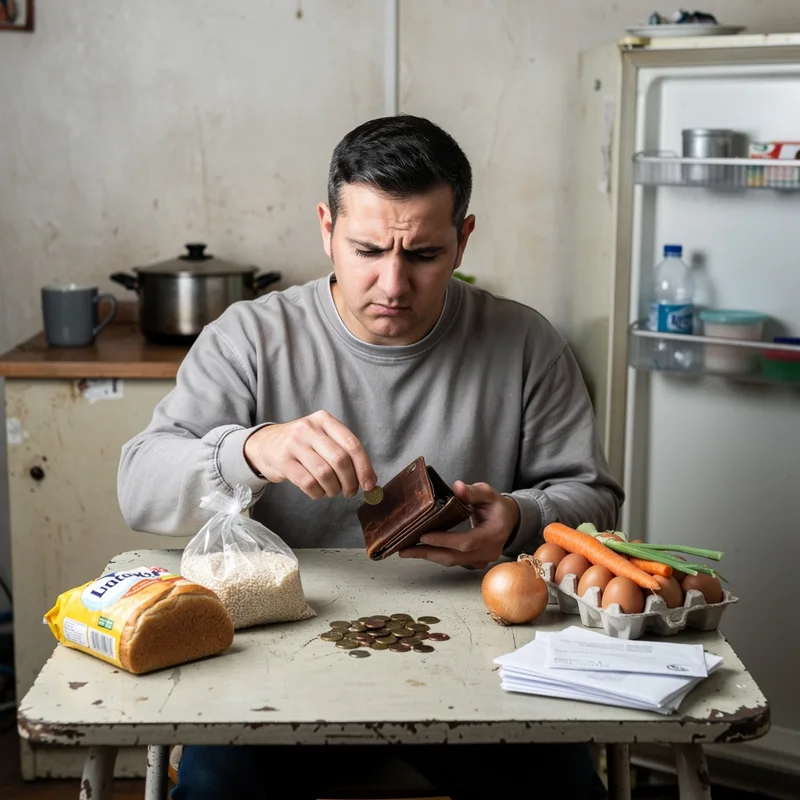
hand-to-mouth
 1
6.8
1
6.8

- idiom
- /hænd tə maʊθ/
- Informal
- Life was precarious at best, a kind of hand-to-mouth existence.
- hand-to-mouth existence
Loading YouTube…
Watch on YouTubeMost of you are living hand to mouth, paycheck to paycheck.
- Most of you are living hand to mouth, paycheck to paycheck.
- And this is when he brings out his his first poems and he's living pretty hand to mouth at at at the time.
Examples
-
Unfortunately, today our foreign policy is living hand-to-mouth.
Academic text (1998) -
Most of you are living hand to mouth, paycheck to paycheck.
-
Such a hand-to-mouth existence leaves little time for the luxury of dissent.
Academic text (1994) -
While the city's tradition-bearers were celebrated the world over, at home, many lived hand-to-mouth, outside mainstream social and economic systems.
Blog text (8) -
During the next year, my grant expired along with my little stipend, and the only thing I had to fall back on was my hand-to-mouth existence, which I stubbornly clung to.
Fiction book (1996) -
But you weren't content to eke out a living hand-to-mouth, scrimping by on Ramen noodles and beanie-weenies so that retirement and the kids' college would one day be possible.
Blog text (6) -
Many families are currently living hand-to-mouth without any savings for emergencies.
-
Due to rising costs, she finds herself in a hand-to-mouth situation, struggling to make ends meet.
-
Living a hand-to-mouth lifestyle means there is no financial cushion for unexpected expenses.
Synonyms
 43
1.5
43
1.5
Without enough food, clothes, or a home and often gets help from others
 24
4.3
24
4.3
Having no money
 20
6.5
20
6.5
Very poor and without basic things like food or a home
 11
5.5
11
5.5
Having little or no savings and needing each payday to pay bills
 9
5.1
9
5.1
Very poor and needing help to live
 1
8.6
1
8.6
Having no money at all


 1
9.9
1
9.9
Very poor and unable to pay for basic needs

A person who has little money and cannot buy basic things

A person who has little money to pay basic costs
Very poor and only able to pay for basic needs like food
Not having enough money or help for basic needs

Having no money to pay for things

Poor and without enough food, money or shelter
Antonyms


How Secure
520
2.5

- Specialized
31
4.7
107
2.9
- Informal
1
6.8
50
6.2
20
6.5
Surface Forms
Morphology
Etymology
Hand-to-mouth comes from the image of moving food from your hand into your mouth, so you live by using what you have right now. That's why hand-to-mouth describes having only 'enough for today' and no savings or safety.