
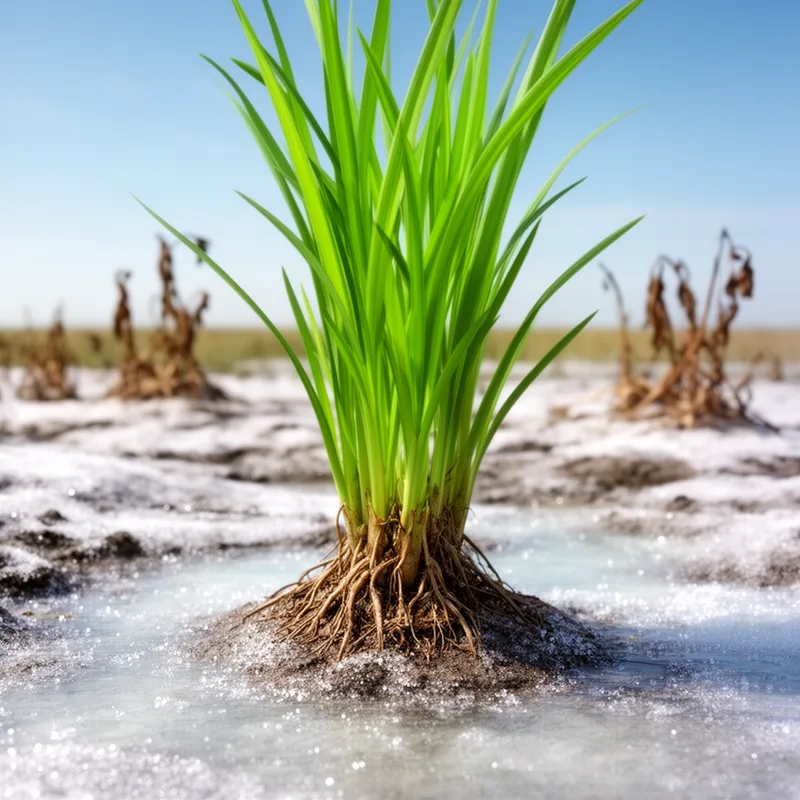
halophytic


 1
9.9
- adjective
- /ˌheɪloʊˈfaɪtɪk/
- Specialized
- "In much of the literature, statice is said to be halophytic, or salt-loving," she says.
Examples
-
The lagoon edges, both on the interior edge of the barrier islands and the mainland, are fringed with halophytic vegetation.
Academic text (1993) -
Sand-dune communities are highly xeromorphic, halophytic, rich in endemics, and generally composed of pantropical and pioneer species typical of the Caribbean region (Sauer 1967).
Academic text (1993) -
Tellingly, the only vegetation growing on or near them was a halophytic chenopod, Heterostachys ritteriana.
Academic text (2003) -
Halophytic chenopods, such as saltbushes, are green throughout the year, and their lush color might mislead one into thinking they are an ideal food source for plant-eating mammals.
Academic text (2003) -
The marsh is home to many halophytic plants that can survive in the salty environment.
-
Many coastal regions are inhabited by halophytic vegetation, which thrives in saline conditions.
-
Researchers are exploring halophytic crops to improve agriculture in saline soils.
Synonyms
 1
9.5
Able to live and grow in very salty places like salt lakes
How Salt-Tolerant
- Specialized
1
9.5

- Specialized
1
9.9
Surface Forms
Morphology
Etymology
Halophytic comes from Greek parts halo- meaning 'salt' and -phytic meaning 'plant', so it is like saying 'salt plant'. A halophytic plant is one that can live and grow in salty soil or water.