

gravitational attraction
 1
4.1
1
4.1

- noun
- /ˌɡrævɪˈteɪʃənəl əˈtrækʃən/
- Specialized
- These compact conglomerations of hundreds of thousands of stars, bound together by their gravitational attraction, contain some of the oldest stars in our galaxy.
- gravitational attraction between two
Loading YouTube…
Watch on YouTubeThat dark energy will ultimately overcome the gravitational attraction of stars that are held together within galaxies.
- That dark energy will ultimately overcome the gravitational attraction of stars that are held together within galaxies.
- But just little me with my arm lifting, this can overcome the entire gravitational attraction of the Earth.
Examples
-
Tides are predictable energy forms at any site in the world, since they are due to the gravitational attractions of the moon and the sun.
Academic text (2009) -
Instead, the experimenter faces the daunting task of measuring the tiny gravitational attraction between two objects of known mass in the laboratory.
Academic text (2002) -
Or even better: all the bodies in the solar system move under their mutual gravitational attraction; they are all in free fall.
Blog text (30) -
How come the gravitational attraction, that force wasn't affected by this expansion of that?
-
That dark energy will ultimately overcome the gravitational attraction of stars that are held together within galaxies.
-
So dark matter has gravitational attraction, but it is invisible and we are clueless as to what dark matter really is.
-
As they grow more massive, these "planetessimals" begin to be able to use their mutual gravitational attraction to accelerate the process.
Academic text (1999) -
Given a sufficient amount of mass, and hence gravitational attraction, the universe will stop expanding after billions and billions of years, then begin to contract.
Fiction book (1999) -
Newton was the first to realize that a simple algebraic equation could describe the gravitational attraction between any two bodies, and that from that equation you could "weigh" the Earth and predict the future orbits of the planets.
Academic text (2003) -
When you weigh yourself, you are measuring the amount of gravitational attraction exerted on you by Earth.
Synonyms
 335
2.3
335
2.3
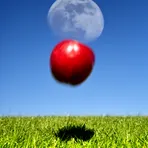
The force that makes things fall to the ground and keeps planets moving
 96
2.8
96
2.8
A force that pulls objects toward each other, like gravity or magnets
 7
4.2
7
4.2
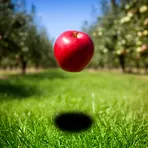
A pull between all objects, especially Earth's pull on things near its surface
 4
4.1
4
4.1
A force that pulls objects toward each other and makes things fall to Earth
 1
6.8
1
6.8
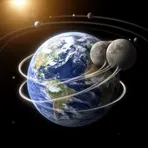
A force that pulls objects with mass toward each other, keeping planets and moons in place


 1
3.4
1
3.4
The pull that makes things fall toward Earth or another large body
 1
4.7
1
4.7
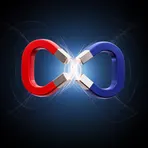
A pull that makes two things move toward each other, like gravity or magnets
Surface Forms
Morphology
The phrase 'gravitational attraction' is directly compositional: 'gravitational' (relating to gravity) modifies 'attraction' (a pulling force), so the meaning 'the pull between masses due to gravity' follows straightforwardly from the constituents. This technical term uses a common noun–modifier pattern found across languages, so a B1 learner who knows both words can reliably infer the overall meaning.
Etymology
Gravitational attraction comes from the simple image of one object pulling another, like the Earth pulling an apple down. The word gravitational points to 'gravity' and attraction means 'pull', so the phrase explains why things 'fall' to the ground or why the Moon stays near the Earth.