
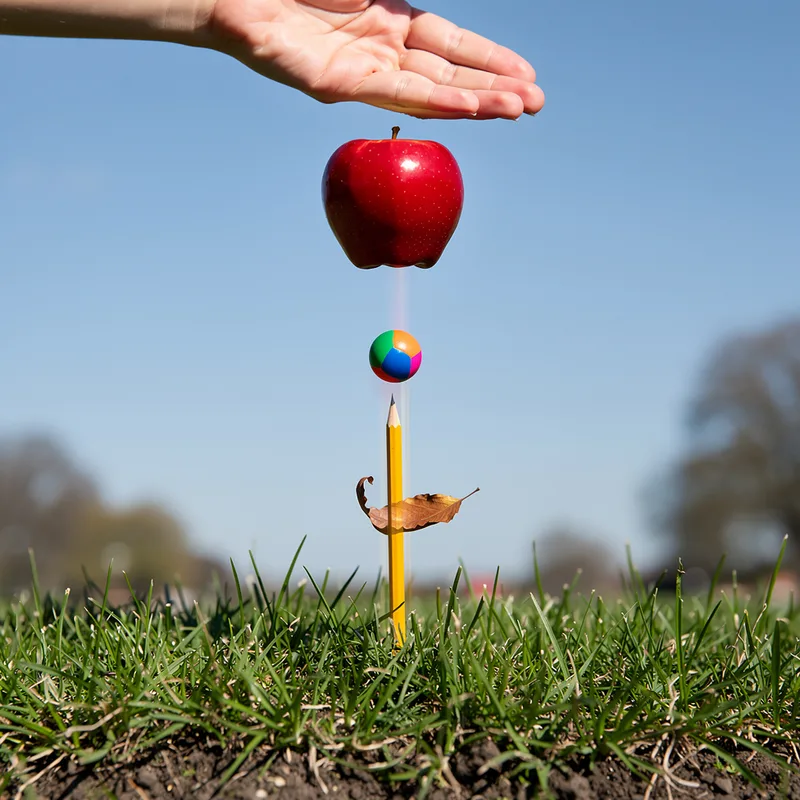
gravitation
 4
4.1
4
4.1

- noun
- /ˌɡrævəˈteɪʃən/
- Specialized
- Isaac Newton described gravitation as a force that causes apples to fall from trees.
- the universal gravitation
- the law of gravitation
- the theory of gravitation
Loading YouTube…
Watch on YouTubeSo that's today's lesson on gravitation and orbits.
- So that's today's lesson on gravitation and orbits.
- So in higher dimensions the gravitation force drops faster with distance to the source.
- Well, one possibility is that there is enough matter and gravitation in the universe to pull it back together.
- You have quantum gravity when you try to apply quantum mechanics to gravitation.
- General relativity, which became our best theory of space and time and gravitation and cosmology and quantum theory.
- The laws of gravitation show that planets that are closer will orbit faster.
- What you're not seeing directly in that is the gravitation.
- Is are the gravitation laws sustained for dark matter or we sure think so.
- If you hold something in your hand, that's not the gravitation of force pushing it down, because gravity isn't a force.
Examples
-
The force of gravitation pulls objects toward the center of the Earth.
-
A satellite moves at a speed that can be computed from Newton's laws of motion and gravitation.
Academic text (1996) -
The gravitation will tend to pull them together.
-
Well, one possibility is that there is enough matter and gravitation in the universe to pull it back together.
-
The laws of gravitation show that planets that are closer will orbit faster.
-
Moreover, Einstein's theory of gravitation breaks down at small distances.
Academic text (2004) -
Nineteenth-century physicists believed gravitation to be the energy source for solar radiation.
Academic text (2001) -
There is a tendency for galaxies to aggregate together in clusters, attracted by their mutual gravitation.
Academic text (1992) -
Isaac Newton's discoveries of the laws of motion and gravitation were of a different kind from those of Kepler and Galileo.
Academic text (2003) -
The concept of gravitation explains why the moon orbits the Earth.
Synonyms
 335
2.3
335
2.3
The force that makes things fall to the ground and keeps planets moving
 96
2.8
96
2.8
A force that pulls objects toward each other, like gravity or magnets
 7
4.2
7
4.2
A pull between all objects, especially Earth's pull on things near its surface
 1
4.1
1
4.1
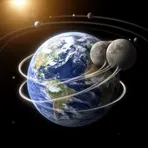
The force that pulls two objects toward each other, for example toward a planet
 1
6.8
1
6.8
A force that pulls objects with mass toward each other, keeping planets and moons in place


 1
3.4
1
3.4
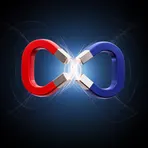
The pull that makes things fall toward Earth or another large body
 1
4.7
1
4.7
A pull that makes two things move toward each other, like gravity or magnets
Compounds

- Specialized
A number that shows how strong gravity is between two objects depending on their mass and distance

- Specialized
All objects attract each other with a force that grows with mass and falls with distance

- Specialized
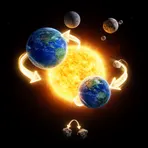
A law saying every two objects pull each other with force that grows with mass and decreases with distance
- Specialized
A scientific theory saying any two objects pull each other more if heavier and less as they get farther apart

- Specialized
A scientific idea about how objects pull each other, with larger objects pulling more and pull weakening with distance
Surface Forms
Morphology
Etymology
Gravitation comes from the Latin root gravis, meaning 'heavy', and is the same root behind gravity. So think of a 'heavy pull' — that is why gravitation means the force that pulls objects together and makes things fall to the ground.