

goose grass
- noun
- Specialized
- You can identify goose grass by its distinctive fingerlike flower spikes and rough leaves.
Examples
-
The fields behind the house were overrun with goose grass during the summer months.
-
Farmers often consider goose grass a nuisance.
-
Gardeners often struggle to control invasive goose grass in their lawns and flowerbeds.
-
The field was covered in goose grass.
-
Gardeners often struggle to control invasive goose grass in their lawns and flowerbeds.
-
Farmers often consider goose grass a nuisance due to its aggressive growth.
-
The fields behind the house were overrun with goose grass during the summer months.
Synonyms

A rough annual grass with fingerlike seed heads that often grows as a weed
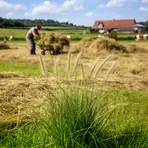
A grass from Europe grown for hay and often a weed in fields

A wild grass that grows in the southern United States and is often cut for hay
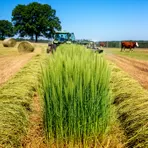
An annual grass grown for hay in the southern United States

A rough grass that grows as a common yard weed with thin flower spikes

A coarse one-year grass that has long thin flower spikes and often grows as a weed
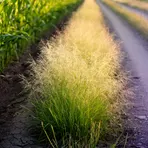
A wild grass that grows in fields and along roads and spreads quickly
Surface Forms
Morphology
The compound 'goose grass' is a straightforward noun+noun composition: 'grass' identifies the plant category and 'goose' functions as a modifier, so a learner who knows both words will reasonably infer it denotes a type of grass or plant associated with geese or resembling something goose-related. Specific botanical details (e.g. silvery leaf undersides) are not predictable from the parts, but the basic referent as a kind of plant is transparently derivable.
Etymology
Goose grass may come from old farms where geese ate this rough plant. People named it for the geese, so today the term often means a common 'weed' or grass used for animal feed.

