

to go to seed
 2
7.3
2
7.3

- phrasal verb
- Informal
- So, he lets the place go to seed until they pay up.
- flowers go to seed
- let them go to seed
- plants go to seed
Loading YouTube…
Watch on YouTubeHowever, much like spinach, it goes to seed so quickly.
- However, much like spinach, it goes to seed so quickly.
Examples
-
Tragically, America's front yard has gone to seed; its dilapidation over a generation has been chronicled with increasing regularity in the press, including The Times.
Blog text (22) -
At least she's been allowed to go to seed.
Fiction book (1999) -
Place is going to seed.
-
-Don't let her stay here and go to seed.
-
The gardens go to seed; the old people don't have the energy.
Fiction book (1998) -
He let his appearance go to seed (he was usually a natty dresser), and nobody wanted to be around him because when a small, rodent-faced man like Mouse got ugly, he was no company even for the harshest man.
Fiction book (2002) -
He could see that from the dilapidated state of the house, yard gone to seed, windows broken, and paint that had been robin's egg blue a decade ago, now weathered to the dingy shade of mop water.
Fiction book (1998) -
After years of neglect, the once beautiful park has gone to seed, with weeds taking over every corner.
-
Since the manager retired, the office has really gone to seed, with papers piling up and no one keeping things organized.
-
If you don't take care of your garden, it will quickly go to seed, making it difficult to restore its former beauty.
Synonyms
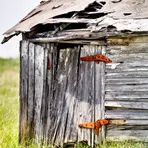 146
5.9
146
5.9
To get worse in quality, condition, or value
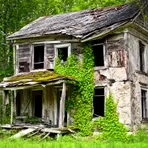 55
3.5
55
3.5
Fall into decay and stop being useful
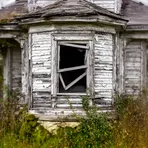 37
4.4
37
4.4
To slowly fall into ruin because of age or neglect
 16
4.2
16
4.2
To slowly become weaker or fall apart because it is not cared for
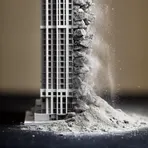 7
6.6
7
6.6
To be completely ruined and lose all value
 6
6.1
6
6.1
To become much worse or ruined
 4
4.0
4
4.0
Start to break into pieces or stop working well
 3
8.2
3
8.2
To become ruined or not cared for
Antonyms


How Neglected


Surface Forms
Morphology
The phrase combines 'go' (become) with 'seed' using a horticultural metaphor: plants 'go to seed' when they stop being tended and begin producing seed, which logically links to decline. However, the figurative sense 'become neglected or deteriorate' depends on cultural/biological knowledge and is not immediately predictable for a B1 learner who only knows the literal words.
Etymology
Go to seed may come from gardens: when plants are left alone they stop making flowers and start making seed, so the beds look untidy and the plants seem weak. So, to go to seed now means 'to become neglected' or fall into poor condition.