
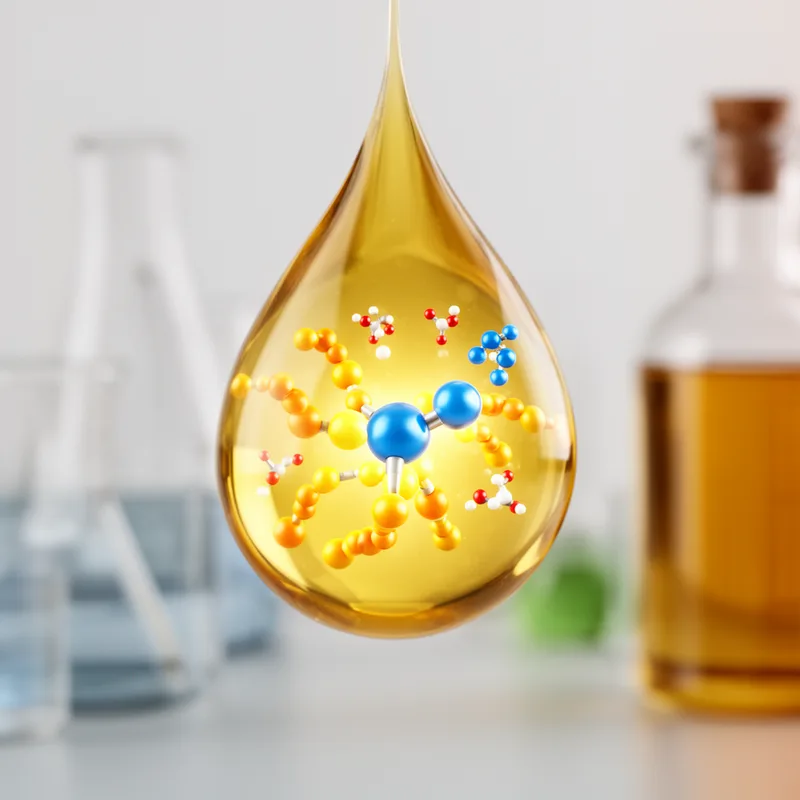
glyceryl ester
- noun
- /ˈɡlɪsərəl ˈɛstər/
- Specialized
- Many vegetable oils are composed primarily of glyceryl esters derived from fatty acids.
Examples
-
The breakdown of glyceryl esters in the body releases energy for metabolic processes.
-
Many glyceryl esters are used in cosmetics.
-
Chemists analyze glyceryl esters to understand their role in nutrition and biochemistry.
-
A glyceryl ester is commonly used in food products.
-
Chemists analyze glyceryl esters to understand their role in nutrition and biochemistry.
-
Many vegetable oils are composed primarily of glyceryl esters derived from fatty acids.
-
The breakdown of glyceryl esters in the body releases energy for metabolic processes.
Synonyms
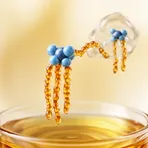
A substance in fats and oils made from glycerol and fatty acids

A substance in fats and oils made from glycerol and fatty acids, for example triglycerides
Surface Forms
Morphology
The meaning of 'glyceryl ester' is directly compositional: combining 'glyceryl' (a glycerol-derived radical) with 'ester' (an organic compound formed from an acid and an alcohol) yields an ester derived from glycerol. This chemical naming pattern is regular and cross-linguistically consistent, so a learner who knows both constituent meanings can infer the MWE's meaning.
Etymology
Glyceryl ester comes from its two parts: glyceryl (from glycerol, the small center of the molecule that works like a 'handle') and ester (the link that joins an acid to that handle). So imagine a glycerol 'handle' with fatty 'tails' attached — that image explains why glyceryl esters are the molecules in 'fats and oils' that give energy.

