

glenoid fossa
- noun
- /ˈɡlɛnɔɪd ˈfɑsə/
- Specialized
- The dentist explained that pain near the glenoid fossa could indicate a temporomandibular joint disorder.
Examples
-
A fracture involving the glenoid fossa may affect jaw movement and require specialized treatment.
-
Detailed imaging of the glenoid fossa helped surgeons plan the reconstructive procedure.
-
The glenoid fossa is crucial for jaw movement.
-
In anatomy, the glenoid fossa is part of the jaw joint.
-
The dentist noted that inflammation in the glenoid fossa might lead to discomfort when chewing.
-
An injury to the glenoid fossa can limit the movement of the jaw and affect eating.
-
Surgeons focus on the glenoid fossa during procedures related to the jaw joint.
Synonyms
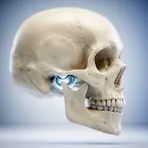
A hollow in the skull where the lower jaw bone fits
How Deep
- Specialized
 11
5.3
11
5.3


- Specialized
70
4.1
- Specialized
1
9.9
- Specialized
- Specialized

 1
9.9
6
1.6
1
9.9
6
1.6
Surface Forms
Morphology
The phrase combines 'glenoid' (relating to a socket) and 'fossa' (a bony depression), so a learner who knows both parts can infer it denotes an anatomical hollow associated with a joint socket. However, the term is highly technical and the precise anatomical location and function (e.g. receiving the mandibular condyle in the temporal bone) are specialized and not fully predictable from the constituents, so it is only partially transparent.
Etymology
Glenoid fossa comes from old Greek and Latin words: glenoid means 'socket-like' and fossa means 'shallow hollow'. Picture a shallow cup in the skull that receives the end of the jaw bone, and that's why the name fits the hollow of the jaw joint.