
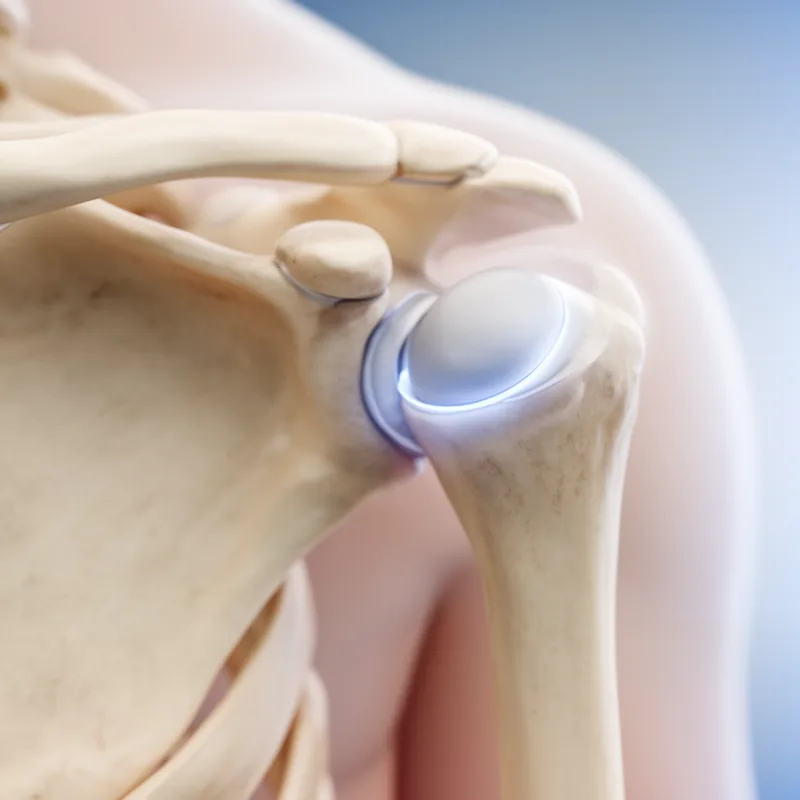
glenoid
- adjective
- /ˈɡlɛnɔɪd/
- Specialized
- Scavenius and Sloth (7) found that 56% of the fractures were located on the body of the scapula, while 44% were of the glenoid cavity or neck of the scapula.
- glenoid fossa
- glenoid cavity
Examples
-
Injuries to the glenoid can impair the shoulder's functionality, making it difficult to lift objects overhead.
-
Figure 3: With loss of the left deltoid muscle, the humerus sags within the glenoid fossa, causing a lack of stability.
Academic text (2015) -
The most difficult aspects of dissection were the freeing of the mass from the area of the glenoid fossa and the sparing of blood vessels at the base of the skull.
Academic text (1999) -
The axillary nerve innervates the deltoid and teres minor muscles, which provide humeral stability within the glenoid fossa, shoulder external rotation, and shoulder abduction.
Academic text (2015) -
Finally, McGahan et al. (4) found that 49% of fractures were of the body or spine of the scapula, 36% were of the glenoid cavity or neck, 8% were of the acromion, and 7% were of the coracoid.
Academic text (2015) -
In a typical shoulder joint, the humerus fits snugly into the glenoid cavity, allowing for a wide range of motion.
-
The doctor explained that the glenoid region is crucial for shoulder stability during athletic activities.
Compounds


Surface Forms
Morphology
glenoid = glen + oid
The term is a specialized anatomical formation from a combining form 'glen-' (not the common English 'glen' meaning valley) plus the suffix '-oid', so an average learner cannot derive the medical meaning from familiar English parts.
Etymology
Glenoid comes from the Greek root glen- meaning 'socket' and the ending -oid meaning 'like', the same ending you see in humanoid or asteroid. So glenoid means 'socket-like', which is why it describes things related to the shallow shoulder socket.

