
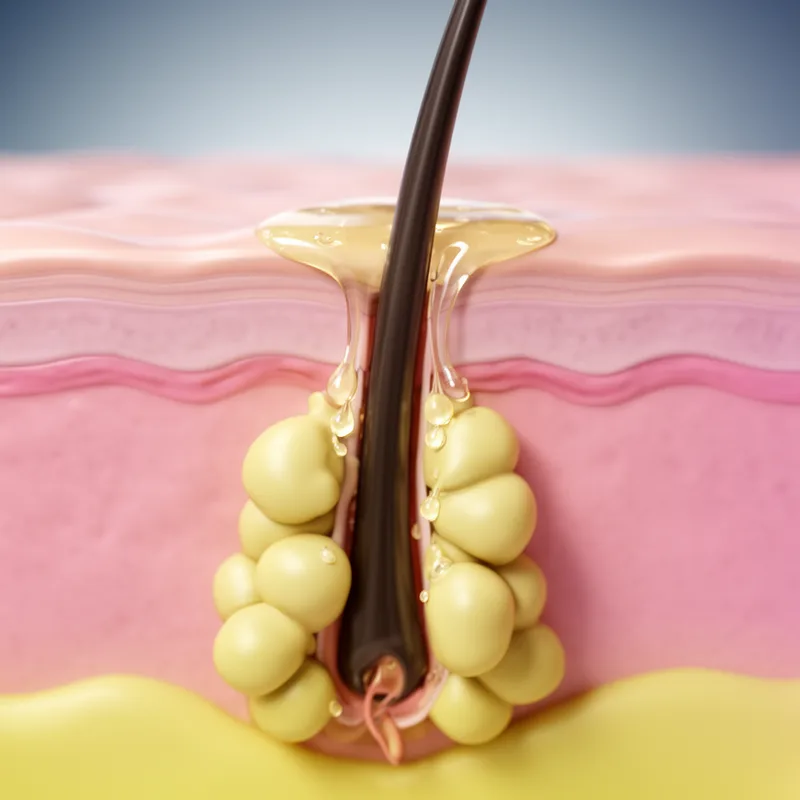
glandulae sebaceae
- noun
- /ɡlænˈdjuːliː sɪˈbeɪʃiː/
- Specialized
- Inflammation of the glandulae sebaceae can result in acne.
Examples
-
The glandulae sebaceae help protect the skin by secreting oily substances.
-
Excessive activity of the glandulae sebaceae may cause oily skin.
-
The glandulae sebaceae produce an oily substance.
-
She learned about the glandulae sebaceae in her biology class.
-
Inflammation of the glandulae sebaceae can result in acne.
-
Excessive activity of the glandulae sebaceae may cause oily skin.
-
The glandulae sebaceae help protect the skin by secreting oily substances.
Synonyms
 1
5.9

A small part under the skin that makes oil to keep hair and skin soft

 1
3.7
A small part of the skin that makes oil to keep skin and feathers waterproof
 1
6.9
A small skin gland that makes oil and sends it into a hair follicle to protect hair
Surface Forms
Morphology
glandulae + sebaceae
This is a literal, compositional scientific/Latin term: 'glandulae' corresponds to glands and 'sebaceae' to sebaceous (sebum-producing), so the phrase simply means 'sebaceous glands.' The morphology mirrors equivalent forms in many languages (e.g. Spanish glándulas sebáceas, French glandes sébacées), so a learner who knows both constituents can directly infer the meaning.
Etymology
Glandulae sebaceae is a Latin name made of glandulae ('little glands') and sebaceae ('sebum', the skin's 'oil'). They are like tiny oil factories under the skin that pour oil into hair follicles to keep skin and hair smooth, so the name means the skin's oil-making glands today.