

germ cell
 1
5.8
1
5.8

- noun
- /dʒɜrm sɛl/
- Specialized
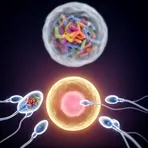
- Meiosis leads to the production of the germ cells, the egg and the sperm.
- germ cell tumor
- germ cell DNA
Loading YouTube…
Watch on YouTubeGermline means changing DNA in embryos or other kinds of germ cells like eggs or sperm.
- Germline means changing DNA in embryos or other kinds of germ cells like eggs or sperm.
- So for both males and females, they help the mitochondria in the germ cell line, which is like the gamete line function.
- It's your child and your child's child because the germ cells for your grandchild are going to be carried in within your child.
- And this gene works in the germ cells.
- If they're that advanced, they can obviously create germ cells to to then grow copies of ourselves in their laboratory.
Examples
-
Loss of amh function causes dysregulation of germ cell development.
Academic text (2017) -
Published guidelines for germ cell cancer are applied only sporadically and should be followed.
Blog text (22) -
Mesoderm layers form inside the embryo or egg where germ cells live.
Academic text (2015) -
But it seems that only germ cells—eggs and sperm—have the appropriate DNA.
Fiction book (1997) -
Taken together, AMH deficiency causes overproliferation and impaired differentiation of germ cells.
Academic text (2017) -
About 95% of testicular tumors arise from the germ cell epithelium that lines the testicular tubes and are known as germ cell tumors.
Academic text (2010) -
Meiosis leads to the production of germ cells, which include the egg and the sperm.
-
Telomerase activity is also high in germ cells, the cells that give rise to eggs and sperm.
-
Researchers discovered how to transform human embryonic stem cells into germ cells that can develop into sperm and eggs.
Synonyms
 4
7.9
4
7.9
A cell like a sperm or egg that joins another cell to make a new living thing
 1
3.4
1
3.4
A cell like a sperm or egg that carries half the genes for a new life


 1
4.1
1
4.1
A cell that joins another to make a new living thing, like sperm or egg
Surface Forms
Morphology
The meaning is compositional: 'germ' (in the biological sense of an embryonic or reproductive element) combined with 'cell' (a microscopic living unit) yields a reproductive cell that transmits genetic material. This construction has close equivalents in many languages (e.g., French 'cellule germinale', Spanish 'célula germinal'), so learners who know both constituents will typically infer the intended scientific meaning. Although 'germ' can also mean a microbe in everyday usage, in this compound the biological sense makes the MWE transparent to B1 learners with the constituent vocabulary.
Etymology
Germ cell may come from the simple image of germ meaning a 'seed' and cell meaning a tiny body, so imagine a tiny seed that carries traits. That's why a germ cell means 'a reproductive cell that passes traits to children'.