

sex cell


 1
4.1
1
4.1
- noun
- /sɛks sɛl/
- Specialized
- During fertilization, a male sex cell unites with a female sex cell to form a new organism.
Examples
-
The factors of heredity lie curled up within these cells, and when a male and a female sex cell unite, these factors show themselves in the descendants.
Academic text (2000) -
Recombination occurs uniquely in each sex cell, making two sisters chromosomes different not only from their parents, but from each other's.
-
Males are the smaller sex cells, females are the bigger.
-
Unless land organisms return to the water to reproduce or have specially adapted sex cells, their options are limited.
-
These gemmules circulate throughout the body, and each sex cell eventually accumulates a full set.
Academic text (2000) -
This could eventually be instrumental in the customized design of genetic traits in embryos or even in sex cells before conception.
Academic text (1999) -
Sperm and egg are examples of sex cells that carry genetic information from parents to offspring.
-
Each sex cell contributes half the genetic material needed to create a unique individual.
Synonyms
 4
7.9
4
7.9
A cell like a sperm or egg that joins another cell to make a new living thing
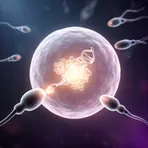 1
5.8
1
5.8
Cell like a sperm or egg that carries genes to children
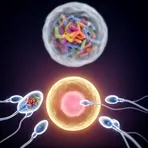 1
3.4
1
3.4
A cell like a sperm or egg that carries half the genes for a new life
Surface Forms
Morphology
The meaning is directly compositional: 'sex' (relating to biological reproduction or male/female) combined with 'cell' (a microscopic living unit) yields a cell involved in sexual reproduction. This noun–noun compound follows a common, cross-linguistic scientific naming pattern, so a B1 learner who knows both constituents can infer the meaning.
Etymology
Sex cell is literal: it combines sex (about 'reproduction') and cell (a tiny living unit). These are the special cells like 'sperm' and 'egg' that join to make a new living being, so sex cell simply means a cell used for producing offspring.