
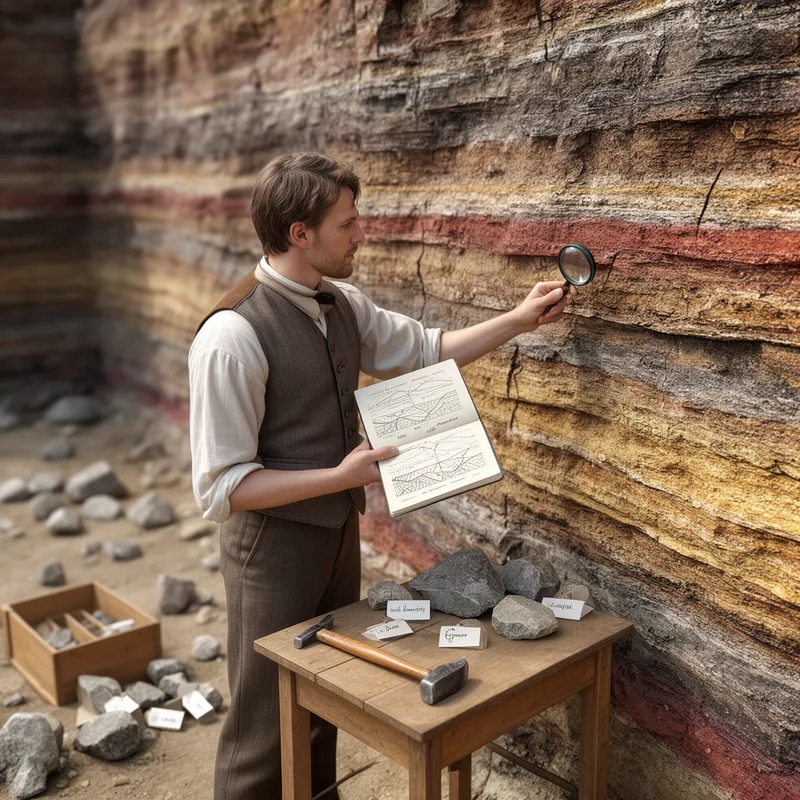
geognosy
- noun
- /dʒiˈɑɡnəsi/
- Archaic
- Geologists rely on geognosy to describe the physical properties of rocks and minerals.
Examples
-
The study of geognosy helps scientists understand the Earth's materials and structures.
-
In her geology class, she learned about geognosy and its importance in studying the Earth's composition.
-
America must draw from the broad and deep quarries of its own mountains, foundation stones, and columns and capitals, which bear the impress of an indigenous mental geognosy.
Academic text (1996)
Synonyms
 49
3.5
49
3.5

The study of the Earth's rocks, structure, and history
 3
3.4
3
3.4
The study of the Earth's land, rocks, water, and air
 3
6.7
3
6.7
The study of Earth's physical features and natural processes like earthquakes and gravity
 2
3.5
2
3.5
The study of the Earth, its rocks, and natural processes to find useful information

The study of the Earth's physical parts and changes using physics
Surface Forms
Morphology
geognosy = gnosis (semi-transparent) = geo + gnosy
The word transparently combines geo- 'earth' with a learned base meaning 'knowledge', but the old technical term is specialized and not common in modern English.
Etymology
Geognosy comes from the Greek parts geo- 'earth' and -gnosy 'knowledge', like in familiar words such as geography and geology. It literally means 'knowledge of the earth', which explains why it was used for the old scientific study that described the Earth's layers and materials.