
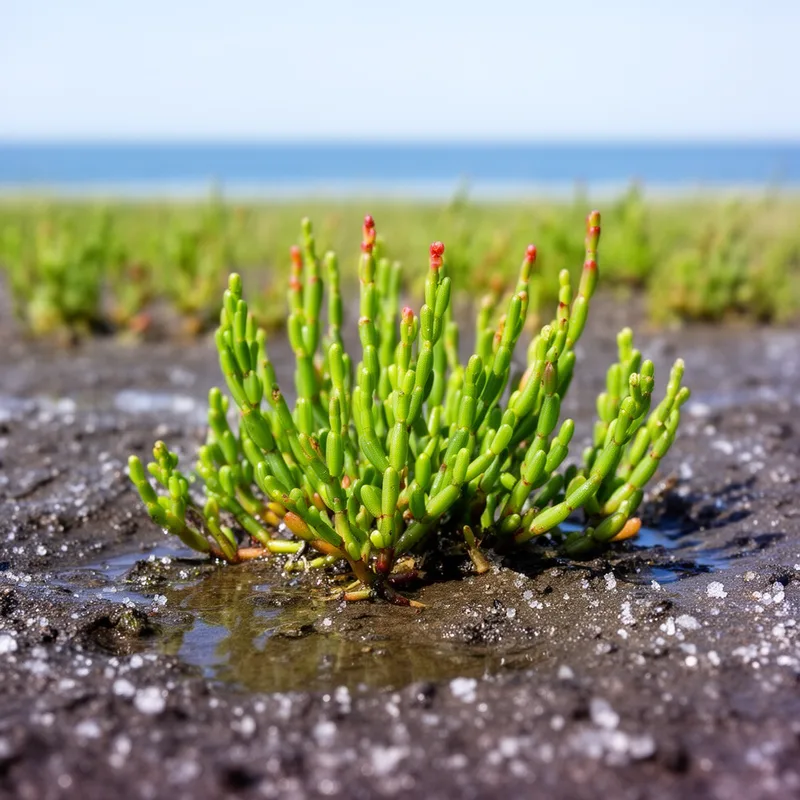
genus Salicornia
- noun
- Specialized
- The genus Salicornia is commonly found in salt marshes along the coast.
Examples
-
Researchers are studying the unique salt tolerance of plants in the genus Salicornia.
-
Glassworts from the genus Salicornia are sometimes used in gourmet cooking.
-
The genus Salicornia includes several species of glasswort.
-
Did you know that genus Salicornia thrives in saline environments?
-
Researchers are studying the unique salt tolerance of plants in the genus Salicornia.
-
The genus Salicornia is commonly found in salt marshes along the coast.
-
Did you know that genus Salicornia thrives in saline environments?
Synonyms


 1
9.9
1
9.9
A thick plant that stores water and grows in salty marshes by the sea

A plant that grows in wet areas near the sea with thick stems used to make ashes for glass
A thick-stemmed coastal plant with small flat leaves that grows in salt marshes
Surface Forms
Morphology
The phrase simply combines the taxonomic headword 'genus' (a biological rank) with the taxon name 'Salicornia' (a group of salt-tolerant plants), so its meaning — the taxonomic group called Salicornia — is directly derivable from the parts. Although somewhat technical, this is a purely compositional noun phrase following standard naming conventions found across languages, and thus transparent to learners who know both constituents.
Etymology
Genus Salicornia comes from old words for salt and little horn because the plant's thick, jointed stems look like tiny horns and it grows in salty marshes, so the name points to these salt-loving plants.