
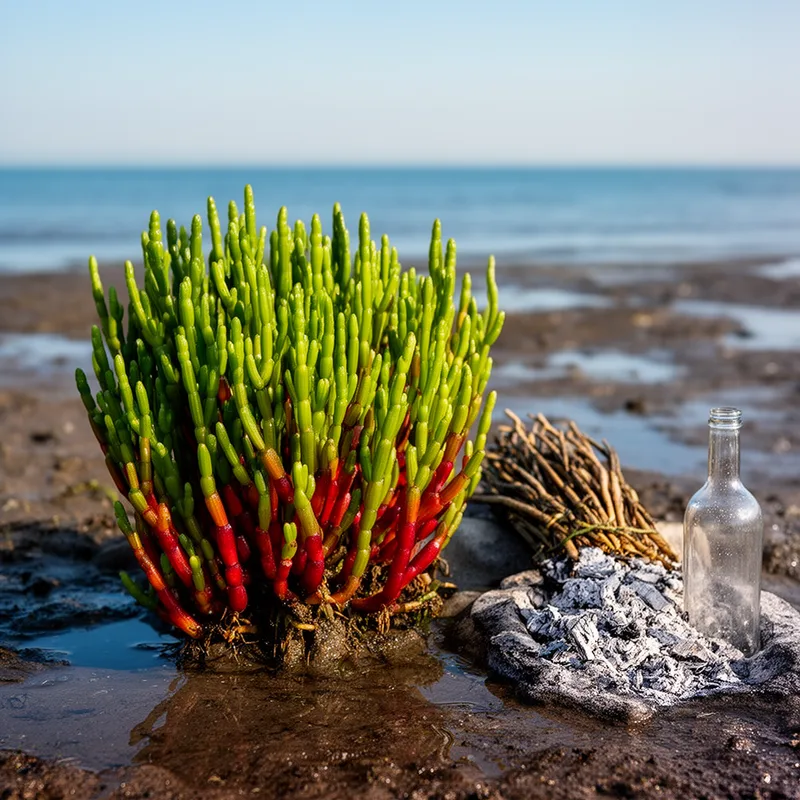
glasswort
- noun
- /ˈɡlæsˌwɔrt/
- The glasswort thrives in salty environments.
Examples
-
The tidal flats were covered in dense patches of glasswort, turning red in the autumn sunlight.
-
Historically, glasswort was burned to create soda ash for glass production.
-
A botanist walked along the estuary collecting samples of glasswort for her research.
-
Many coastal regions are home to glassworts.
-
The coastal landscape is dotted with glasswort, which adds a unique green hue to the scenery.
-
In salt marshes, glasswort provides a critical habitat for various bird species.
-
Farmers sometimes burn glasswort to create soda ash used in glass-making.
Synonyms


 1
9.9
1
9.9
A thick plant that stores water and grows in salty marshes by the sea
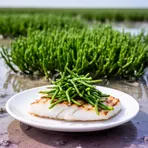
A marsh plant with thick stems that tastes salty and people use as a garnish
Small plants with thick stems that grow in salty coastal marshes
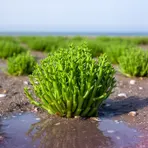
A thick-stemmed coastal plant with small flat leaves that grows in salt marshes
Surface Forms
Morphology
Etymology
The word glasswort is made of glass and wort, where wort is an old word meaning 'plant', as in St. John's wort. People burned these coastal plants to help make glass, so the name literally means 'the plant used for glass'.