
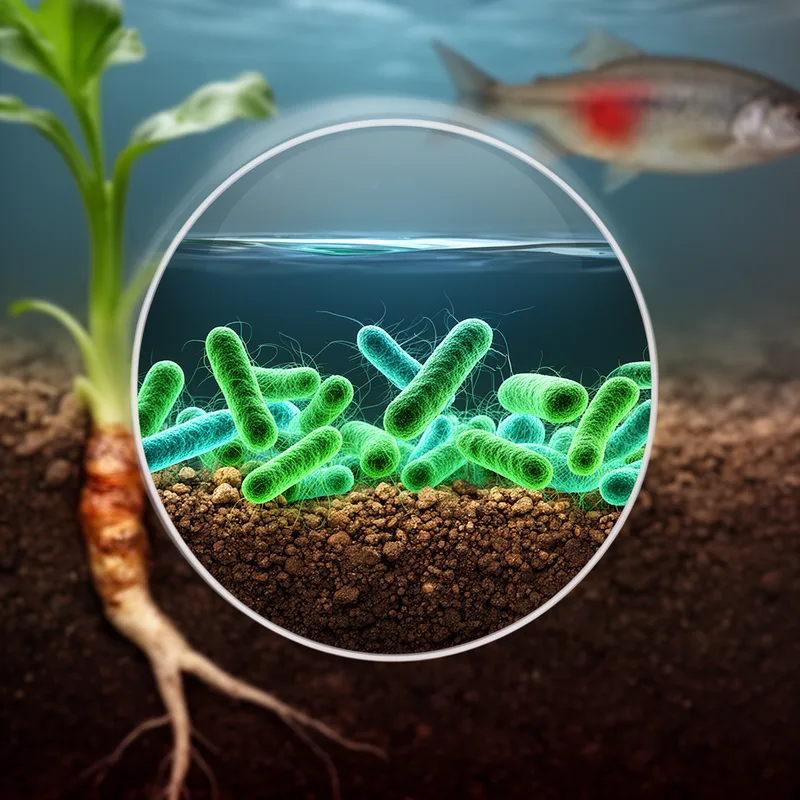
genus Pseudomonas
- noun
- /ˈdʒɛnəs ˌsuːdəˈmoʊnəs/
- Specialized
 :
género Pseudomonas
:
género Pseudomonas
- The genus Pseudomonas includes various species of Gram-negative bacteria found in soil and water.
Examples
-
The genus Pseudomonas includes bacteria commonly found in soil and fresh water.
-
Several species within the genus Pseudomonas are known for their resistance to antibiotics.
-
Researchers are studying the genus Pseudomonas because of its environmental and medical importance.
-
The genus Pseudomonas includes many important bacteria.
-
Several species within the genus Pseudomonas are pathogenic.
-
Researchers are studying the genus Pseudomonas because some species can cause diseases in plants and animals.
-
Several species within the genus Pseudomonas are known for their ability to survive in harsh environments.
Synonyms

A group of bacteria that includes species that can cause disease in people and plants
Surface Forms
Morphology
The phrase is fully compositional: 'genus' (a biological rank) combined with the taxon name 'Pseudomonas' yields the taxonomic group called the genus Pseudomonas. Although 'Pseudomonas' is a scientific proper name that learners may or may not know, if they know both constituents the overall meaning is directly derivable; taxonomic naming patterns are cross-linguistically regular and predictable.
Etymology
Genus Pseudomonas may come from two old Greek words: pseudo meaning 'false' and monas meaning 'single unit'. Scientists used this name for tiny single-celled microbes that looked like simple cells but were not quite the same, so the name stuck for this group of bacteria.

