

Pseudomonas
- noun
- /ˌsuːdəˈmoʊnəs/
- Specialized
 :
Pseudomonas
:
Pseudomonas
- Certain species of Pseudomonas can be harmful to both plants and animals.
Examples
-
That gene of that enzymes we found in a cystic fibrosis patient sample in Pseudomonas, right?
-
However, Pseudomonas can kind of have a different strain we call Pseudomonas arogenosa.
-
The scientist studied the effects of Pseudomonas on agricultural crops in the laboratory.
-
Researchers are exploring how Pseudomonas bacteria can be used in bioremediation.
Synonyms

A group of bacteria that live in soil and water and sometimes cause plant or animal disease

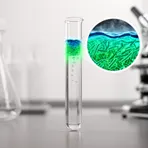
A kind of bacteria that often makes a green, glowing colour and can cause disease in plants or animals
Compounds
- Specialized
A group of bacteria that live in soil and water and sometimes cause plant or animal disease
- Specialized
A type of bacteria that needs air to live and often makes a blue-green colour

- Specialized
A germ that causes brown rot in crops like tomatoes, potatoes, and tobacco
Surface Forms
Morphology
Pseudomonas = pseudo + monas
Although the name can be historically parsed as pseudo- + monas, it functions as a specialized scientific genus name and is not transparently guessable from those parts for most learners.
Etymology
Pseudomonas comes from Greek parts pseudo- 'false' and monas 'single' or 'one'. Think of pseudo- as in pseudonym ('false name') and mono as in monologue ('one'), so the name suggests a 'false one', a single-celled organism that can look like other microbes and so is used for this group of bacteria.

