
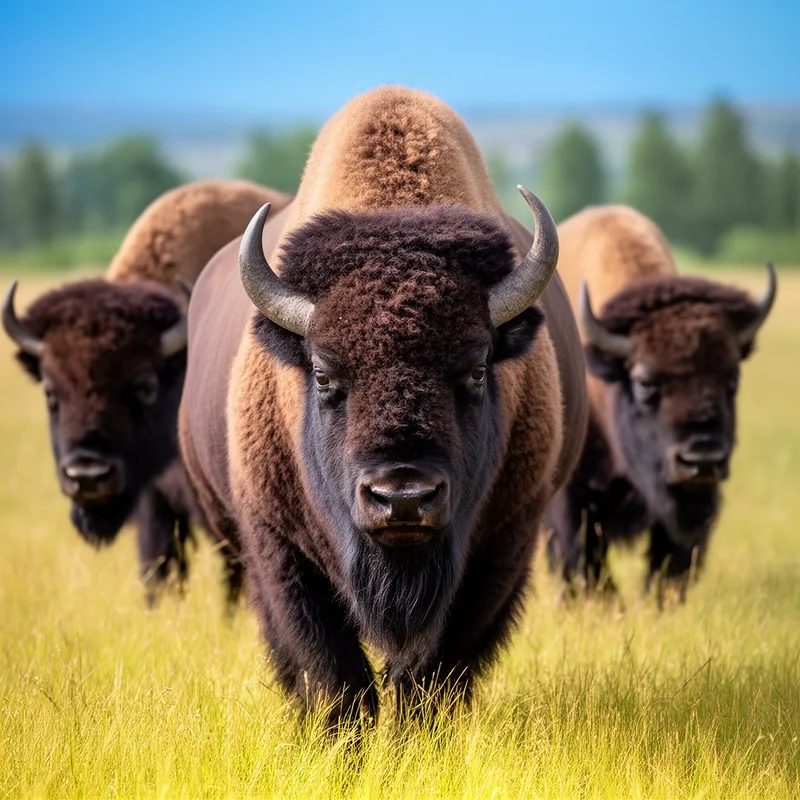
genus Bison
- noun
- /ˈdʒiːnəs ˈbaɪsən/
- Specialized
- The genus Bison includes both the American and European bison.
Examples
-
Scientists debated whether to classify the American buffalo as part of the genus Bison or as a member of Bos.
-
The genus Bison is known for its massive size and thick fur, which helps protect them in harsh climates.
-
Research into the genus Bison has provided new insights into the evolution of large grazing mammals.
-
The genus Bison includes both the American bison and the European bison.
-
Did you know that genus Bison is part of the Bovidae family?
-
Researchers categorize the American bison under the genus Bison due to its distinctive characteristics.
-
In biology class, we learned that the genus Bison consists of two main species: the American bison and the European bison.
Surface Forms
Morphology
The phrase is a straightforward taxonomic noun phrase: 'genus' (a biological rank) combined with 'bison' (the animal) yields the genus that contains bison species. This composition follows regular, cross-linguistic scientific naming patterns and is directly derivable by a learner who knows both constituent words.
Etymology
The name genus Bison comes from the old Latin word bison, which people used for big, wild oxen with a hump and thick hair. Scientists used the word genus to put these similar animals into one 'group', so today genus Bison means the group of large, shaggy animals we call bison.

