
genus Adansonia
- noun
- /ˈdʒɛnəs əˈdænsoʊniə/
- Specialized
- The genus Adansonia includes all eight recognized species of baobab trees.
Examples
-
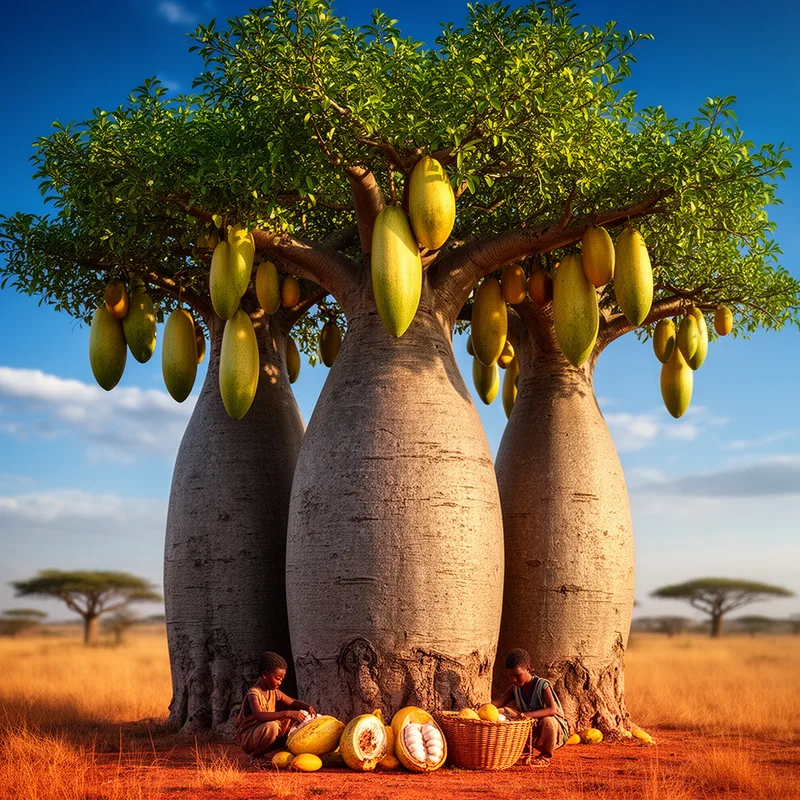
The genus Adansonia is home to the iconic baobab trees that can be found across Madagascar and the African savannas.
-
The genus Adansonia includes several species of baobab trees.
-
Fruits from the genus Adansonia are rich in vitamin C and are used in local diets.
-
Researchers are studying the ecological role of genus Adansonia in sub-Saharan Africa.
-
Did you know that genus Adansonia can store water in their trunks?
-
Baobabs belonging to the genus Adansonia are known for their distinctive shapes and ability to thrive in arid conditions.
-
Many species within the genus Adansonia can live for over a thousand years, making them remarkable trees in the ecosystem.
Synonyms

A large tree like a baobab with a thick trunk that lives a long time
Surface Forms
Morphology
The phrase is fully compositional: 'genus' is a biological rank and 'Adansonia' is the proper name of a baobab genus, so together they mean 'the genus called Adansonia.' This follows a regular noun-naming pattern in scientific terminology (common across languages), so a learner who knows both words would readily understand it.
Etymology
Genus Adansonia is named after the French plant scientist Michel Adanson, who studied baobab trees. In science a genus is a 'group of species', and adding '-ia' to Adanson's name made Adansonia, so genus Adansonia means the group of baobab trees with thick trunks and edible fruit.

