

Adansonia
- noun
- /ˌædænˈsoʊniə/
- Specialized
- The Adansonia tree can live for over a thousand years.
Examples
-
The Adansonia tree is a striking feature of the African landscape.
-
Researchers are studying how climate change affects the growth of Adansonia species.
-
Many legends surround the origins of the Adansonia in Madagascar.
-
Many Adansoniae are found in Madagascar.
-
The Adansonia tree, often called the baobab, can live for over a thousand years, showcasing its remarkable longevity.
-
Many legends surround the origins of the Adansonia, a group of trees that are iconic in Madagascar's culture.
-
Researchers are studying how climate change affects the growth of Adansonia species, which are crucial to their ecosystems.
Synonyms

 2
8.9
2
8.9

A large African tree with a very thick trunk and large fruit with a soft inside you can eat
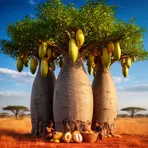
A group of large tropical trees called baobabs with very thick trunks and edible fruit
Compounds

- Specialized
A very large African tree with a thick trunk that makes an edible fruit called monkey bread
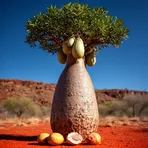
- Specialized
A large Australian tree with a thick bottle-shaped trunk and sour fruit
- Specialized
A group of large tropical trees called baobabs with very thick trunks and edible fruit
Surface Forms
Morphology
Adansonia = Adanson (opaque) = Adanson + ia
The formation is a Latinized taxonomic name (Adanson + -ia) where '-ia' is a classical genus-forming suffix unfamiliar to average learners, so the meaning is not derivable from the components.
Etymology
Adansonia is named after the French plant scientist Adanson, who studied plants in the 1700s. The ending -ia is a common way to name a group of plants, so Adansonia means 'of Adanson' and is the scientific name for the baobab trees.