

gemmule
- noun
- /ˈdʒɛmjuːl/
- Archaic
- According to pangenesis, each organ of the body casts off tiny particles called gemmules.
Examples
-
According to pangenesis, the tentative theory of heredity espoused by Darwin, minute, invisible copies of each body component and organ (gemmules) exist in all cells.
Academic text (1993) -
Thus, the fertilized egg contains a complete array of determinants for growing all parts of the adult body, and embryology becomes a process of making these gemmules manifest and letting them grow.
Academic text (2000) -
These gemmules circulate throughout the body, and each sex cell eventually accumulates a full set.
Academic text (2000) -
According to pangenesis, each organ of the body casts off tiny particles called gemmules.
-
These gemmules circulate throughout the body, and each sex cell eventually accumulates a full set.
-
In Darwin's theory, gemmules are the presumed particles that carry hereditary information.
Synonyms

A tiny part once thought to carry traits from parents inside cells
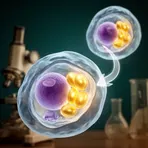
A part inside cells that early scientists thought carried inherited traits
Surface Forms
Morphology
gemmule = gemma (opaque) = gemm + ule
The formation uses a Latin diminutive (gemma → gemm- + -ule) and is a specialized/technical term; typical learners will not reliably infer 'bud' from the form and may be misled by 'gem' (jewel).
Etymology
Gemmule comes from the Latin gemma meaning 'bud' or 'jewel' and the small ending -ule, so it literally means 'little bud'. Darwin used gemmule for tiny imagined particles that carry heredity, so thinking of them as many small 'buds' makes it easy to see why he chose this name.

