

gemmule
- noun
- /ˈdʒɛm.juːl/
- Specialized
- Under favorable conditions, each gemmule can develop into a fully formed adult sponge.
Examples
-
The sponge released numerous gemmules to reproduce and create new sponges in the surrounding water.
-
Scientists observed that gemmules from different species have distinct structures and functions.
-
The gemmules can change in type and number in response to environmental conditions in the tissues.
Academic text (1993) -
The gemmules, including those with acquired changes, are transported by the bloodstream to the sex organs and there assemble into the gametes.
Academic text (1993)
Synonyms


 1
9.9
1
9.9
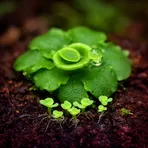
A small part of some mosses or liverworts that breaks off and grows into a new plant
 1
9.9
1
9.9
A part of a plant, like a seed or cutting, that can grow into a new plant
Surface Forms
Morphology
gemmule = gemma (opaque) = gemm + ule
The word is formed with a Latin diminutive and denotes a technical biological structure; learners unfamiliar with the botanical term 'gemma' will not reliably derive the meaning.
Etymology
Gemmule comes from the Latin gemma meaning 'bud' and the small ending -ule, so it literally means 'little bud'. In sponges and some plants, a gemmule is a small reproductive part that can grow into a new individual, so the origin explains the word's modern use for these tiny buds.